Marianna Wahlsten – photos: Danica O. Kus –
In the north of France, in the urban interconnection between Paris, London and Brusselles, the LaM art museum reopened in February after an 18-month restoration period. The metropolitan area of Lille is a fusion of architectural influences, in which the museum stands out as a masterpiece in modesty next to a large park in Villeneuve d’Ascq.
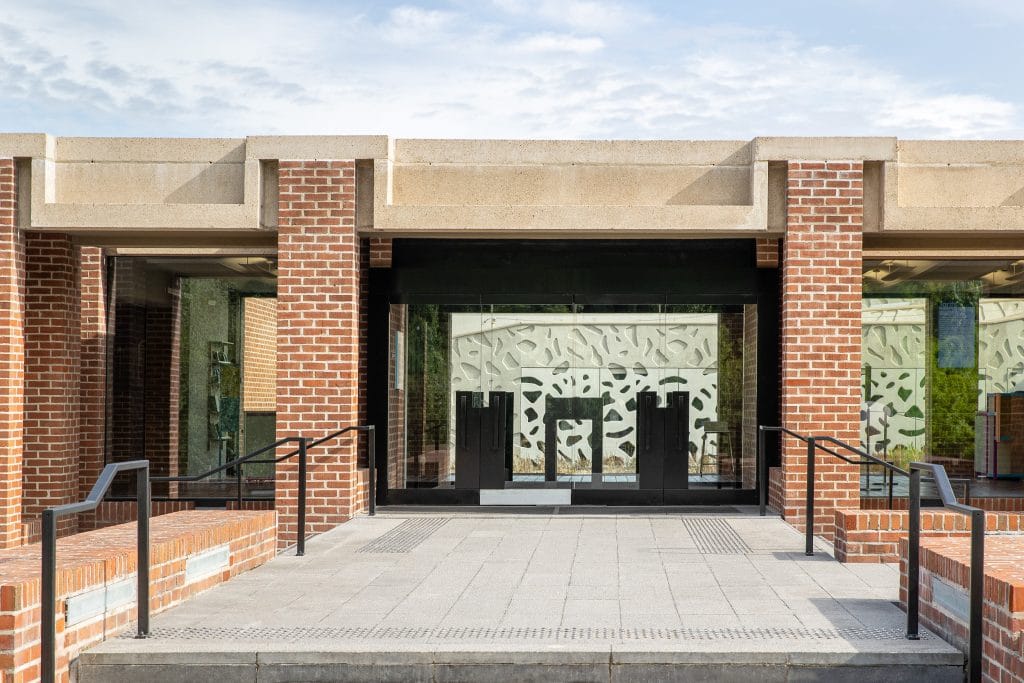
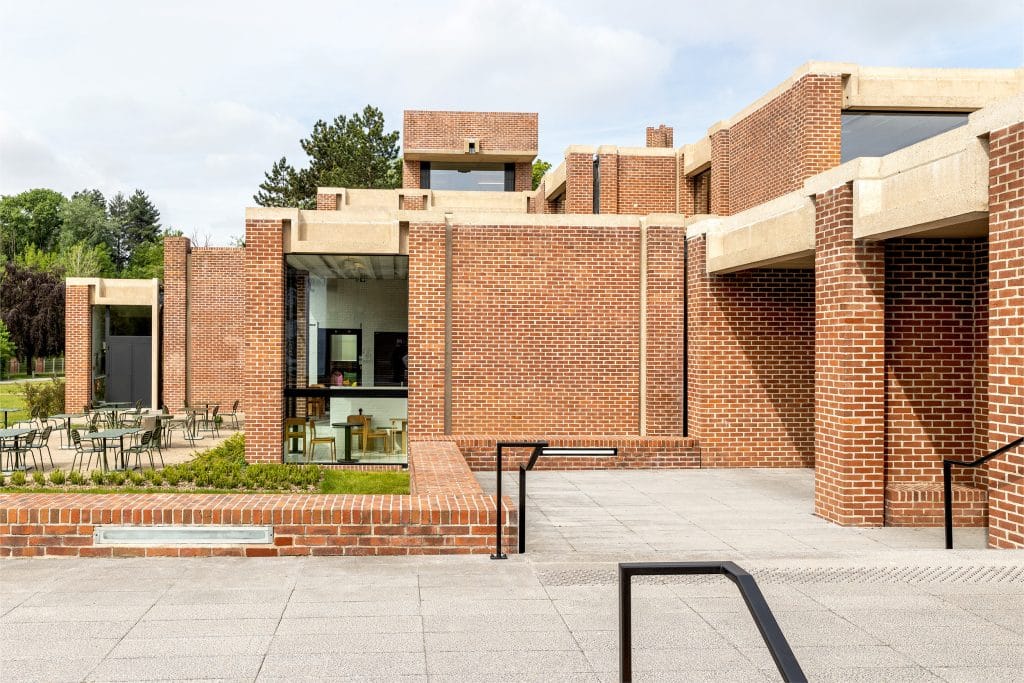
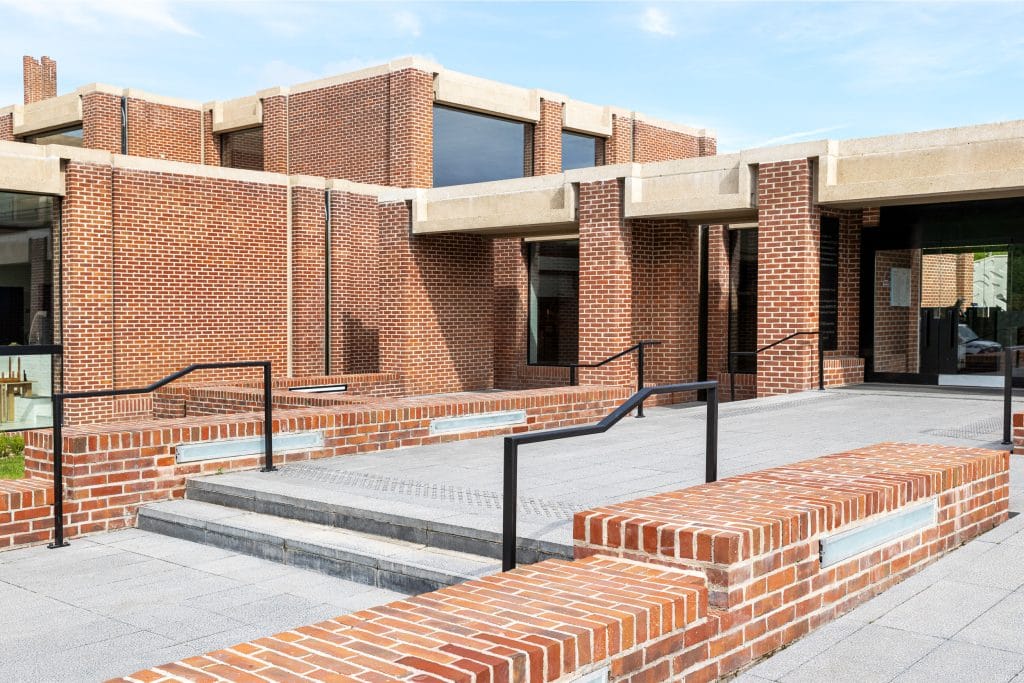
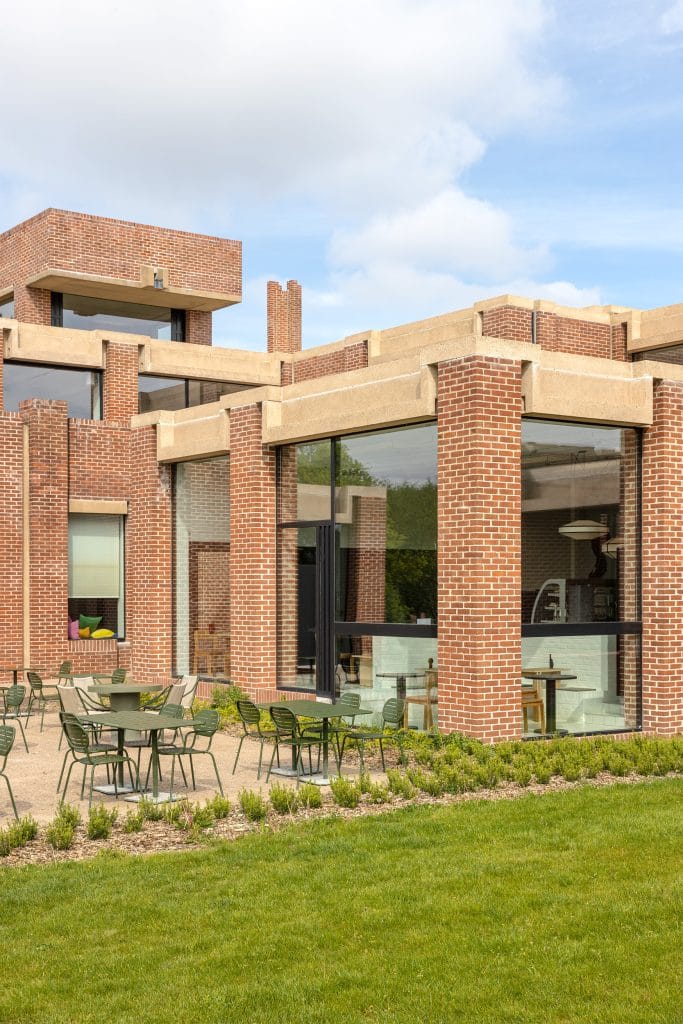
Designed in the late 1970s by French architect Roland Simounet, the LaM museum building has recovered its simple beauty with careful attention to Simounet’s original intentions. Built entirely of red brick with architraves above the large openings in exposed raw concrete, highlighting the vertical flow of the building with the topography. The plain material presence communicates a sense of modesty and restraint. At the same time, this material approach comes across as a paired down version of Flemish architectural styles, where brick has been used for centuries, combined with various forms of decorative elements.
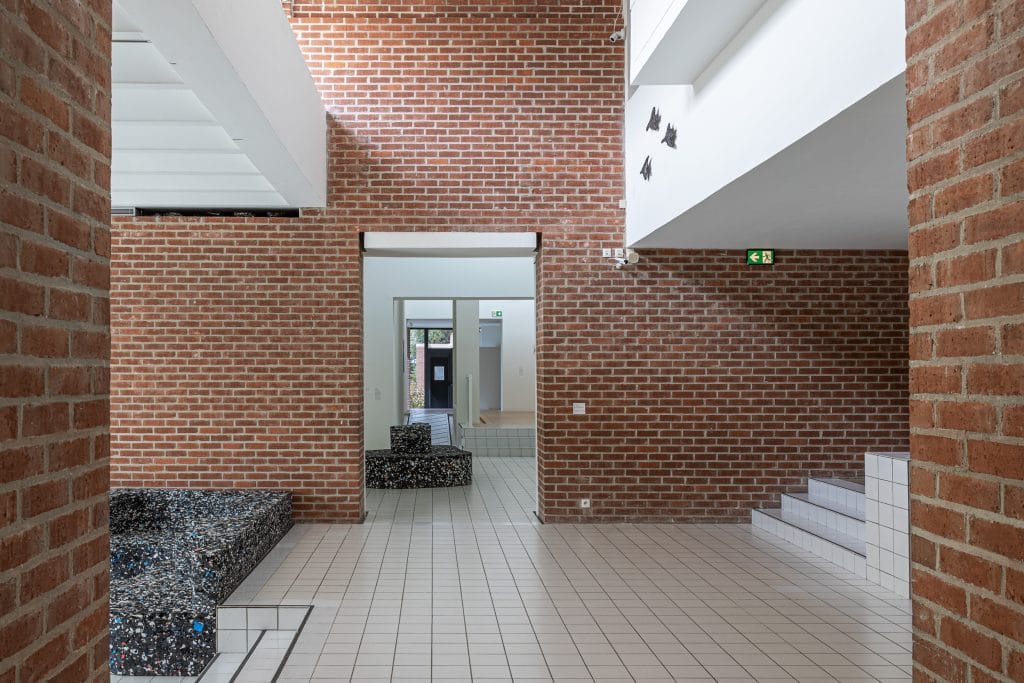
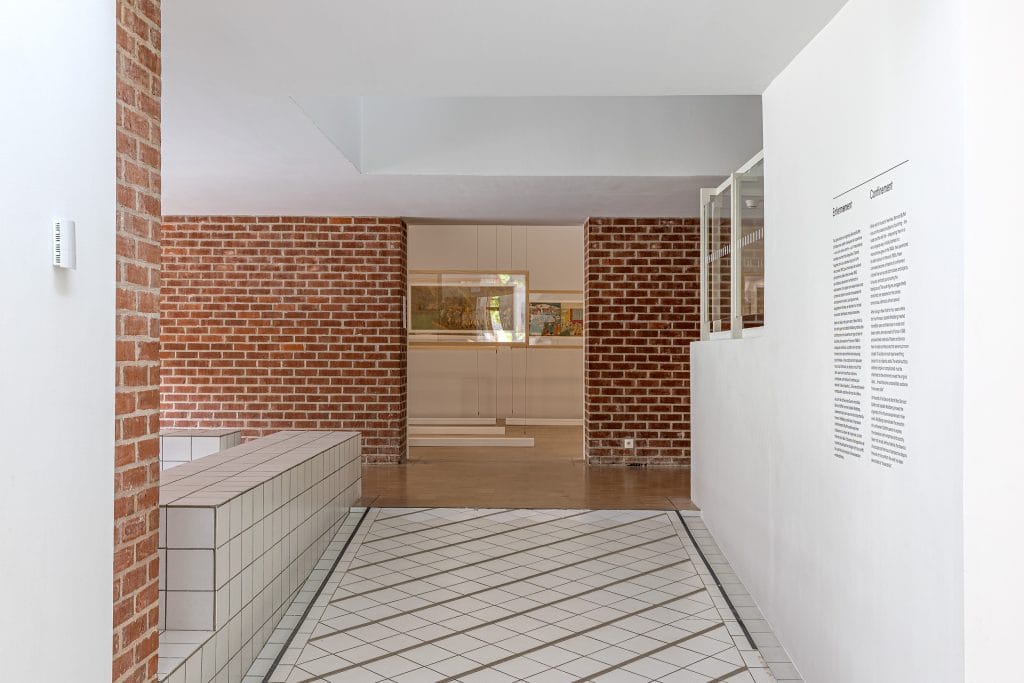
While Simounet clearly sought to link the museum to local architectural traditions, he also sought a visual and formal connection to the surrounding landscape. The play with light inside the gallery spaces and the openings towards the surrounding park has been reinstalled. This has been enabled by new glass technology, which allows light to enter while protecting the artworks from harmful radiation. In total 98 glass panels were installed for better insulation, but visually identical to Simounet’s original concept. The ambiance inside is relaxed and welcoming, almost home-like due to the proportional system, which feels intimate compared to many grand museum spaces, where exhibitions of similar high standards are most often showcased. The spatial experience has been organised with the presentation of artworks combined with exterior views and accents of streaming daylight. Generous seating areas were designed by Clémence Seillès, in which her design studio experimented with a craft-like approach to recycled materials. Produced in varied volumes, these add a layer of casual comfort for the visitors.
During my press visit to the museum on a weekday morning, the space was busy with visitors. The delightful aspect of the museum is the contrast of the simplicity of the architecture with the prestigious art collection, which was initially a donation to the urban community of Lille from the renowned local art collector Jean Masurel, who came from a family of wealthy textile industrialists. This collection consisted of both local avant-garde artists’ works, as well as remarkable cubist paintings inherited from his uncle Roger Dutilleul, which are all part of the museum’s permanent collection, including an entire gallery dedicated to Amedeo Modigliani’s works. The famous art dealer Kahweiler had appreciated Dutilleul’s instinctive connaisseurship towards early twentieth-century avant-garde painting, which now forms the core of the collection, alongside later additions, such as a remarkable collection of art brut from the 1970s. Contemporary acquisitions include a large installation by Daniel Buren.
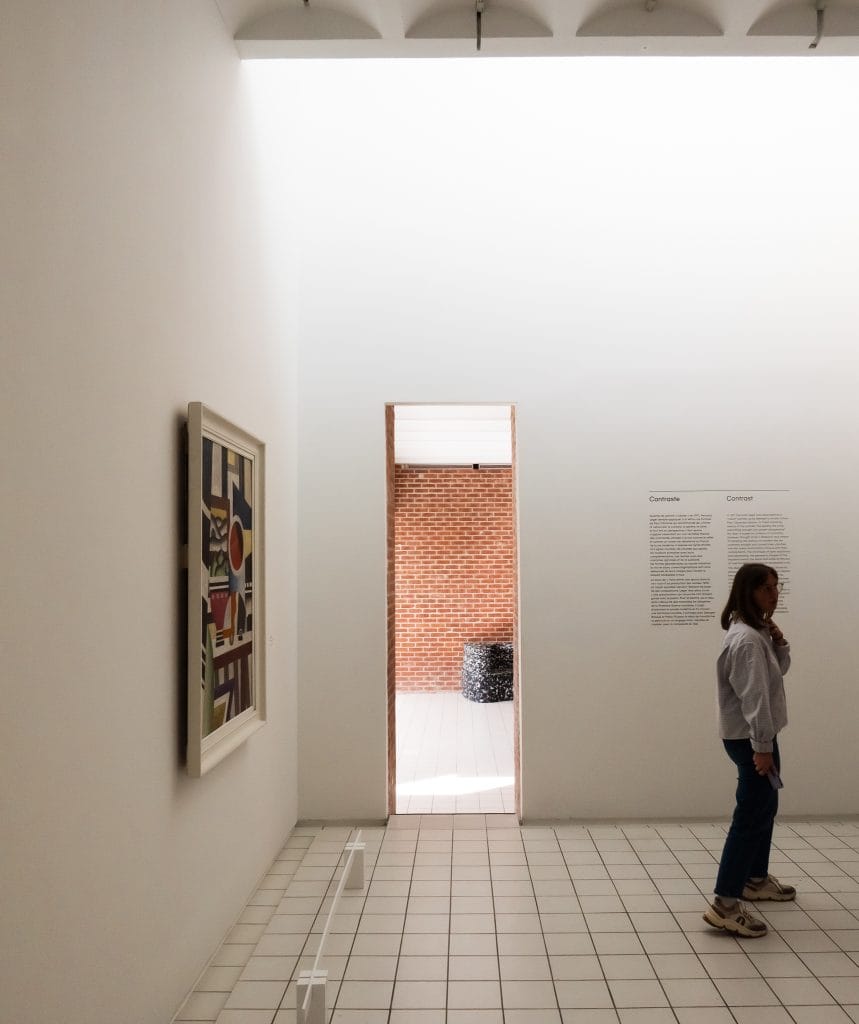
photo: Marianna Wahlsten
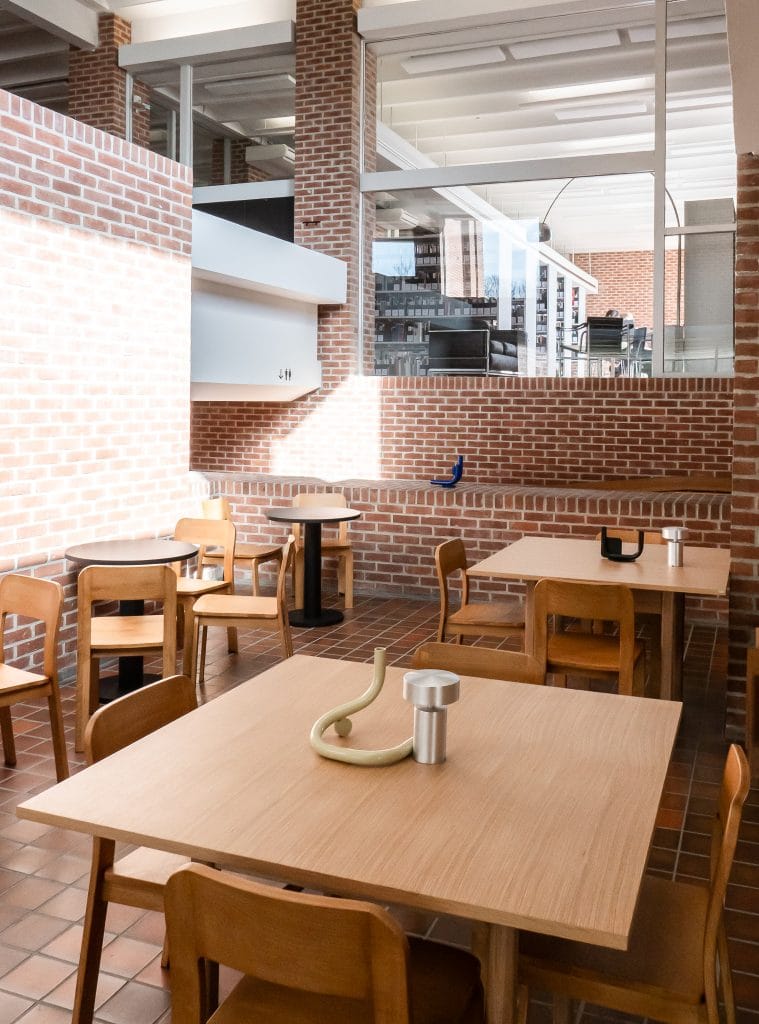
Simounet was selected to design the museum through an architectural contest in 1978, and the building opened in 1983. The formal concept recalls the structuralist architectural approach of the 1960s, in which the interconnections of the different parts of the building were explored and emphasised. It was a tendency that marked Dutch architecture in particular, and which sought organic formal solutions that were flexible and open. In the LaM formal concept, this approach comes across through a varied composition of spaces brought together within the ensemble of the gallery spaces: a café, a restaurant, and public spaces, including a library and an auditorium. While the building is designed to sit on the terrain, the interior spaces have been conceived with natural variation in level and height, providing pleasant routes inside the museum. Now daylight pours in from small window openings, since all the original features from Simounet’s design have been preserved during the restoration.
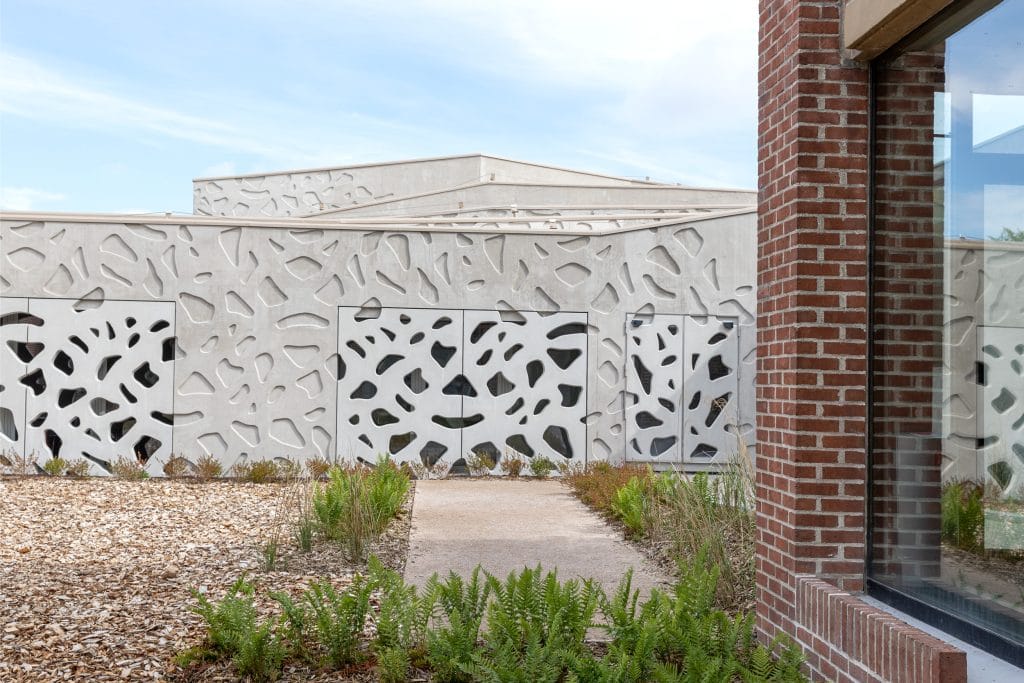
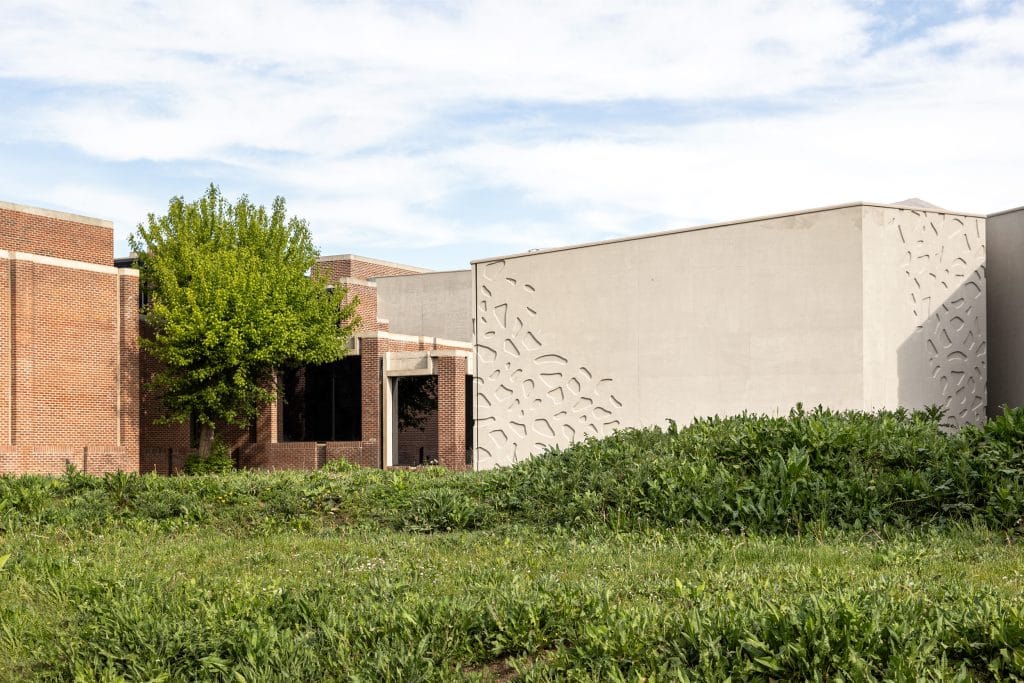
A new wing was added to the museum in 2010 for housing the large collection of art brut, donated by the artistic association L’Aracine, which consists of over 3500 pieces. This part is designed by French architect Manuelle Gautrand. For the opening of the expanded exhibition spaces, the new name LaM (abbreviation of Lille Métropole Musée d’art moderne, d’art contemporaine et d’art brut) was adopted. Gautrand’s formal concept is in contrast with the logic of Simounet’s cubic language by introducing a free-flowing sculptural addition to the museum architecture. This part has also been undergoing renovation works to relink the two buildings. The facades of Gautrand’s extension, marked with abstract motifs, can be appreciated through a more organic intention towards the surrounding landscape.
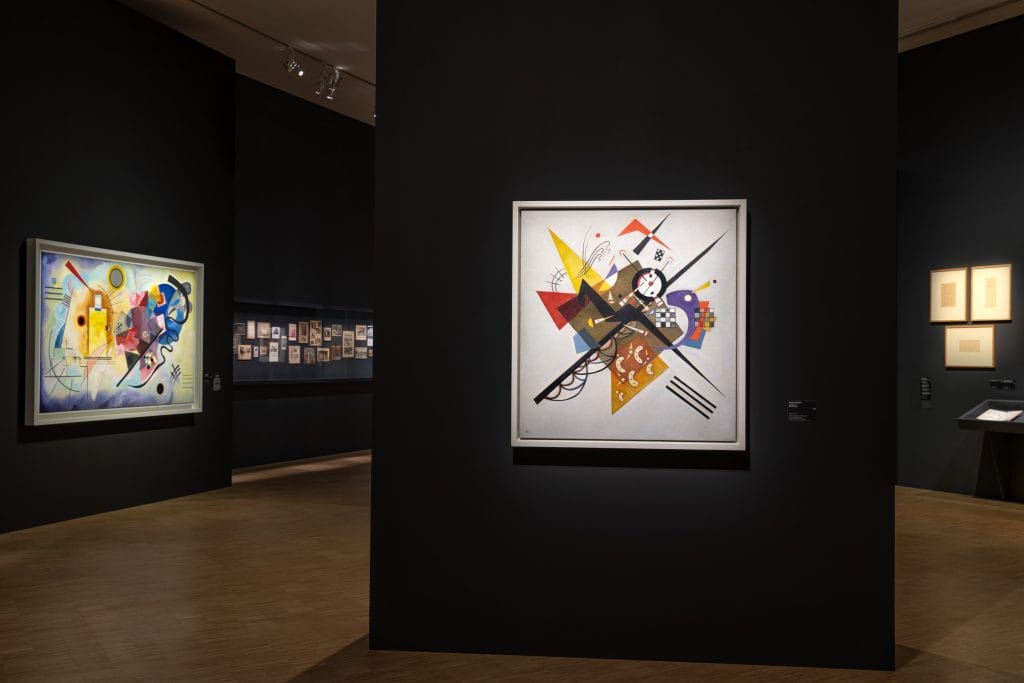
Auf Weiss II [On white II], 1923, Oil on canvas ; 105 x 98 cm., Gelb-Rot-Blau [Yellow- Red-Blue], 1925. Oil on canvas ; 128 x 201,5 cm.
photo: Danica O. Kus
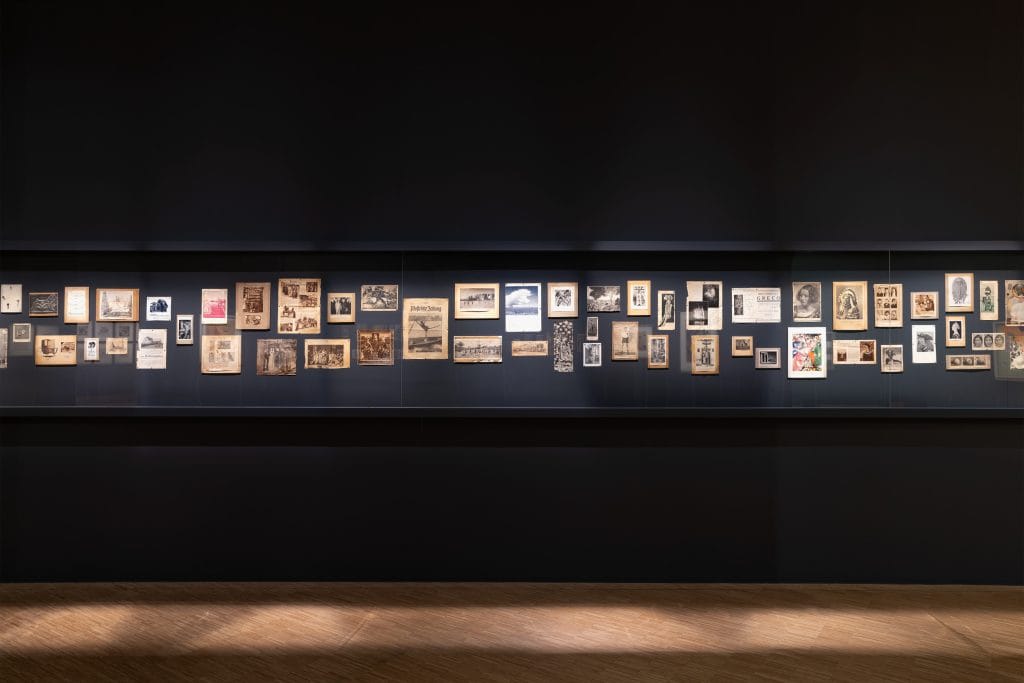
To celebrate the reopening of Simounet’s building, a curatorial collaboration with the Centre Pompidou launched the renovated museum spaces, now redesigned to house the most prestigious artworks. Exploring the inspirations behind Vassily Kandinsky’s artistic production, the new exhibition face aux images is based on rare materials from Centre Pompidou’s extensive archive on Kandinsky’s heritage. As a curatorial collaboration between LaM and Centre Pompidou, the exhibition brings forth the Russian-born artist’s fascination with scientific discoveries in nature and astronomy, as well as psychic phenomena and spiritual experiences. It is the first time such rare materials from the Kandinsky library have been exhibited on this scale, opening a perspective into ideas and inspirations that underpin the artistic creative process.
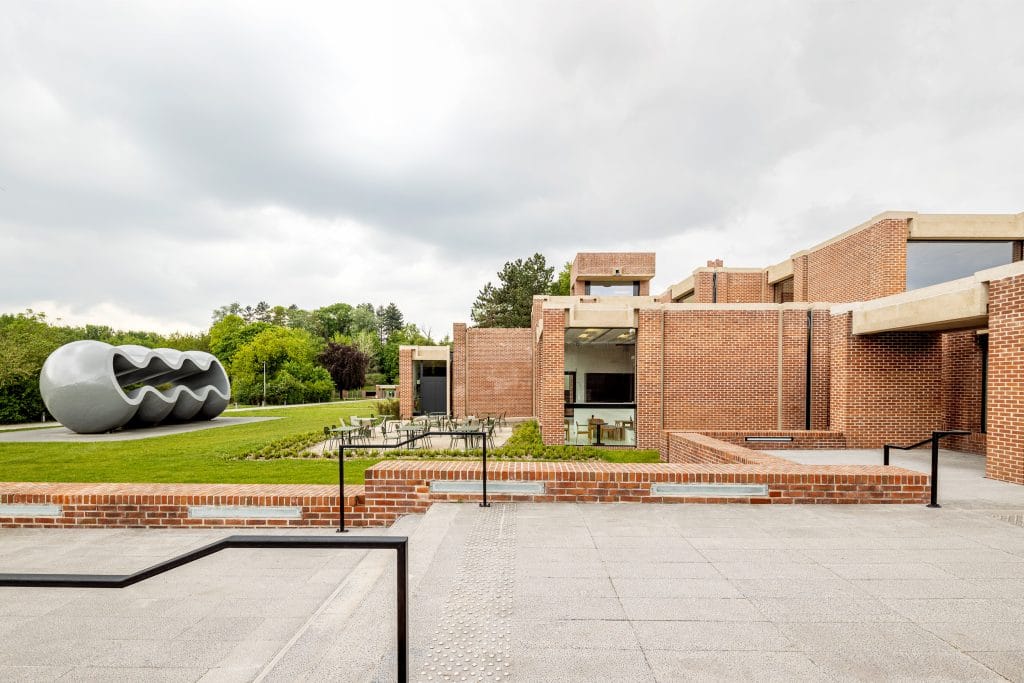
A vast park area surrounds the museum, where the permanent collection is extended outdoors. Dotted around the lawns facing the museum building, there are large-scale sculptures by Alexander Calder, Picasso, and more recent ones by Dan Graham and Richard Deacon. During the summer, special events with music and performance art are organised in the park. With the new restaurant on the first floor of the museum overlooking the park, LaM offers a dynamic cultural program. The restaurant is part of the new organisation, taken over by local chef Florent Ladeyn, offering a menu based on seasonal ingredients and a contemporary take on Flemish culinary traditions.
Just a 15-minute ride from the centre of Lille in the neighbouring new town of Villeneuve d’Ascq, the museum represents the rich cultural heritage and the fusion of influences in the north of France. Since the opening of the Eurotunnel in the late 1990s, Lille has recovered a dynamic identity through its geographic position at the junction connecting Europe through the TGV railway network. The historic architecture reflects its past as a booming town of textile and mining industries with famous art nouveau style buildings by architects such as Hector Guimard and the recently restored Villa Cavrois, an early modernist residential mansion with a brick façade, designed by Robert Mallet-Stevens.
As a counterforce to the historical forms of brick architecture from previous eras, the Euralille zone erected around the TGV station in the late 1990s is based on an audacious masterplan by architect Rem Koolhaas. This vast project transformed the city’s urban heart, while linking the TGV station to the historic centre. With a shopping mall by Jean Nouvel, an office tower by Christian de Portzamparc and the Congrexpo conference and exhibition centre by Koolhaas and OMA, the project was also an interesting example in the handling of frugal materials, even though on a massive scale.
In the pursuit of economic use of materials, the modest beauty of Simounet’s architecture has been linked to vernacular Mediterranean traditions. And certainly, several housing projects in Algeria, where he was born and had an office, must have had an impact on his specific feel for materials and the careful consideration of resources, which is so important today. In 1977 Simounet was awarded the Grand Prix National de l’Architecture in France, and in 1985 he received the Équerre d’Argent prize for the transformation of the Musée Picasso in Paris. His best-known public buildings in France are the Musée de Préhistoire d’Île de France, and his masterwork the LaM museum building, which so brilliantly encapsulates the aesthetic ideal of finding luxury in simplicity.
LaM, Lille Métropole Musée d’art moderne d’art contemporain d’art brut
Kandinsky face aux images, 20 February – 14 June 2026