– MARIANNA WAHLSTEN – PHOTOS: DANICA O. KUS–
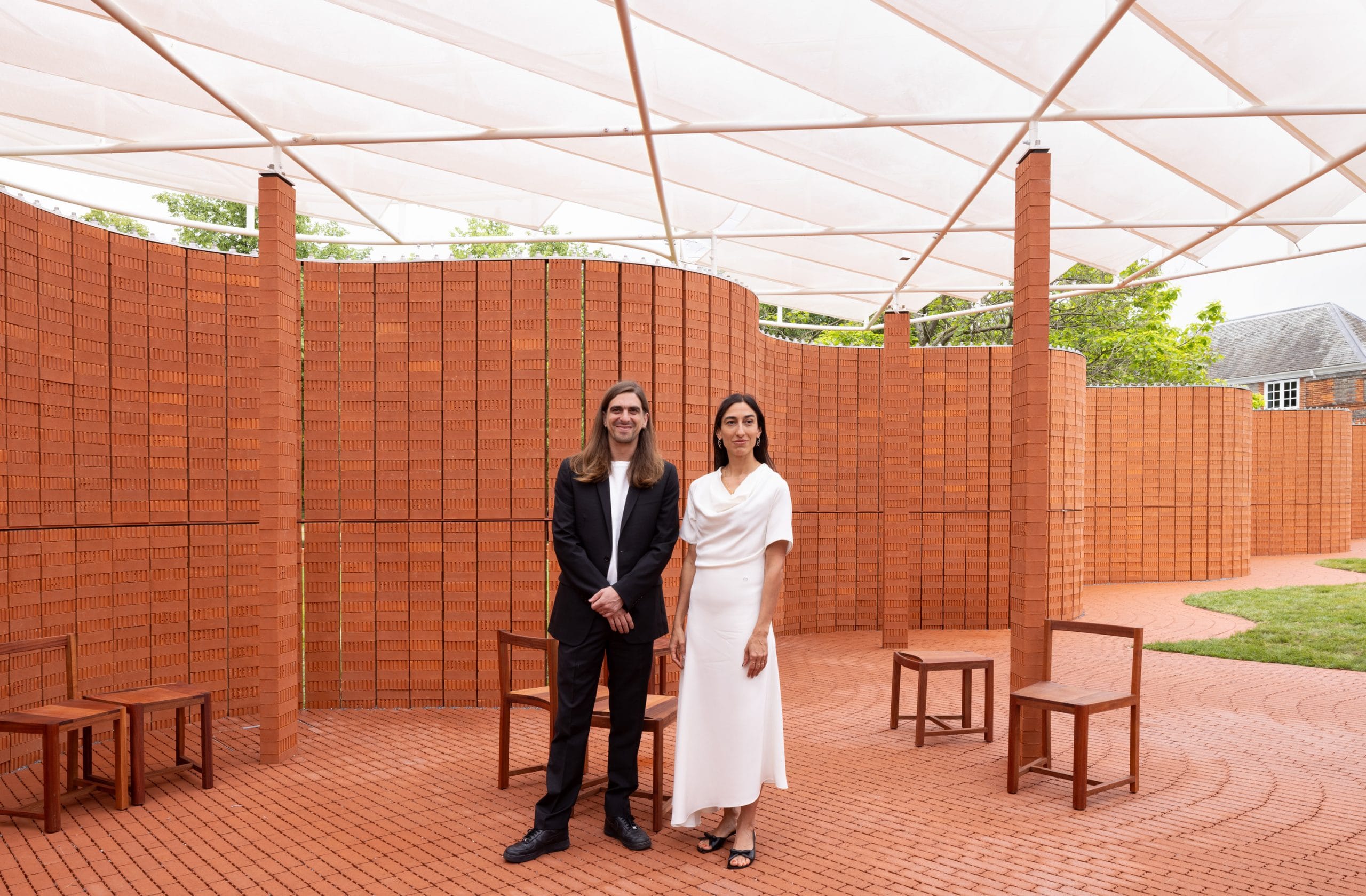
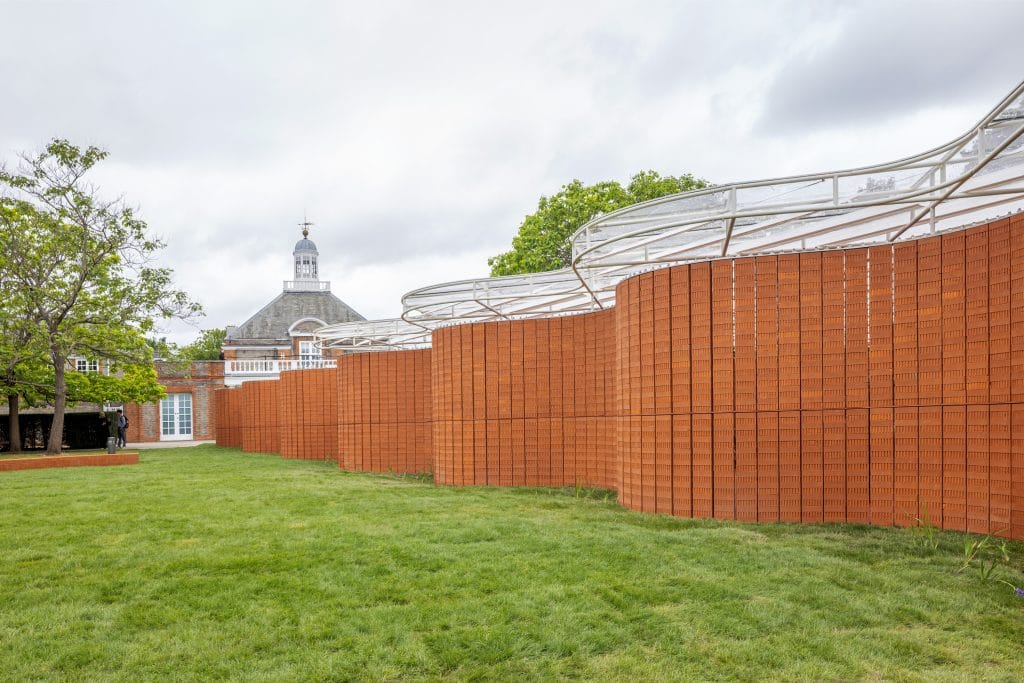
The opening of the Serpentine Pavilion marks the beginning of the London summer – this year with a wave-like brick wall designed by LANZA atelier. Based in Mexico City the architectural studio, launched in 2015 by Isabel Abascal and Alessandro Arienzo, is known for an experimental craft-like approach exploring the aesthetic qualities of traditional materials. In their previous projects, individual curving structures and enclosures had been used for different spatial solutions. In 2022 they were listed for the Brick Award for the Forest House, a residential building with curving outlines designed to accommodate existing trees. For the Serpentine Pavilion, they explored the structural system of a curving wall, drawing from symbolic and historical references.
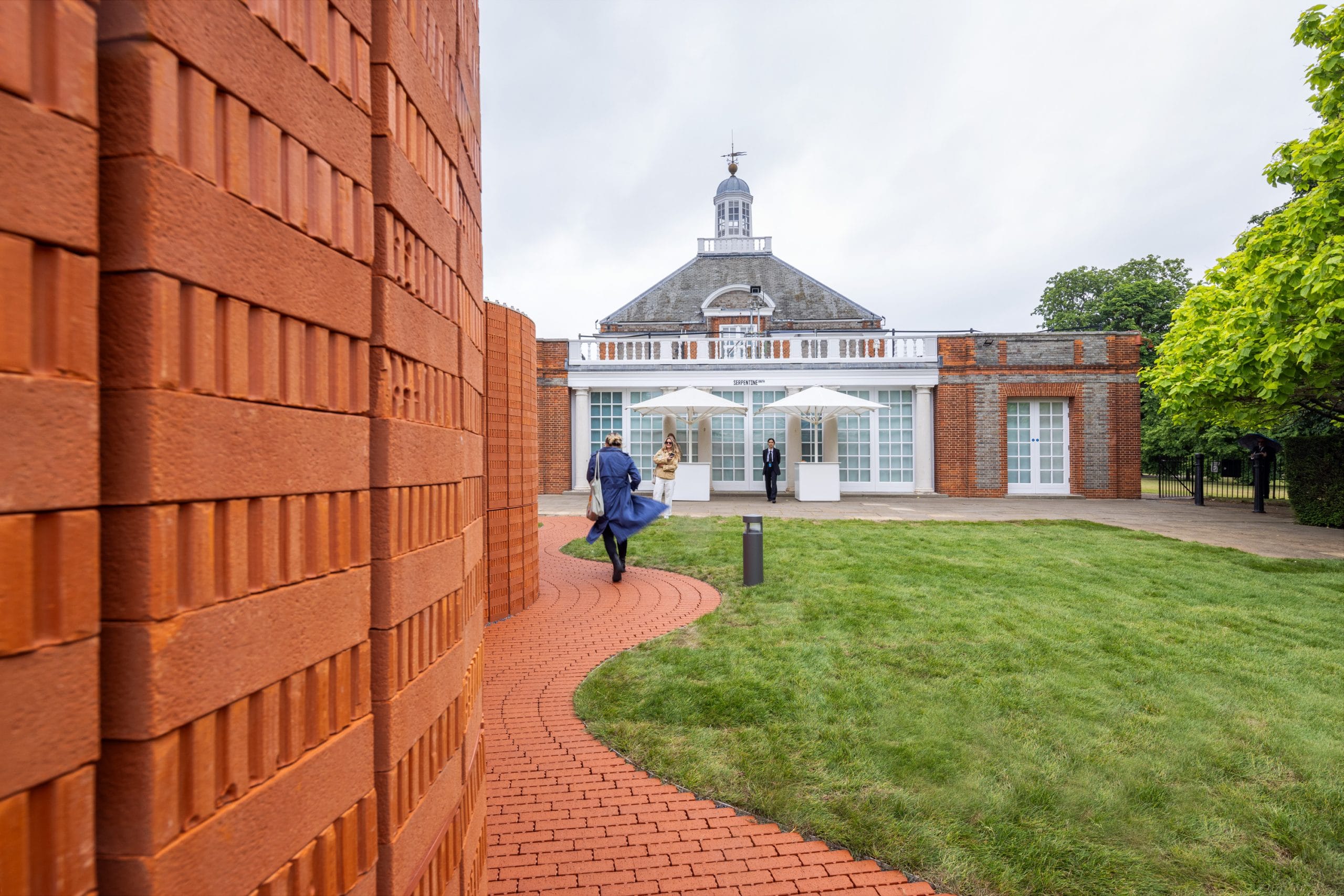
A curving textured presence on Kensington Gardens lawn in the proximity of the Serpentine lake, the 2026 Summer Pavilion is titled a serpentine. As a continuation from LANZA atelier’s interest towards traditional uses of materials, Isabel Abascal and Alessandro Arienzo expanded their research on historical constructions in brick, initially creating a material connection to the 1930s classical-style Serpentine South Gallery. LANZA atelier’s design represents an exquisite modular and formal experiment in the material potential of brick.
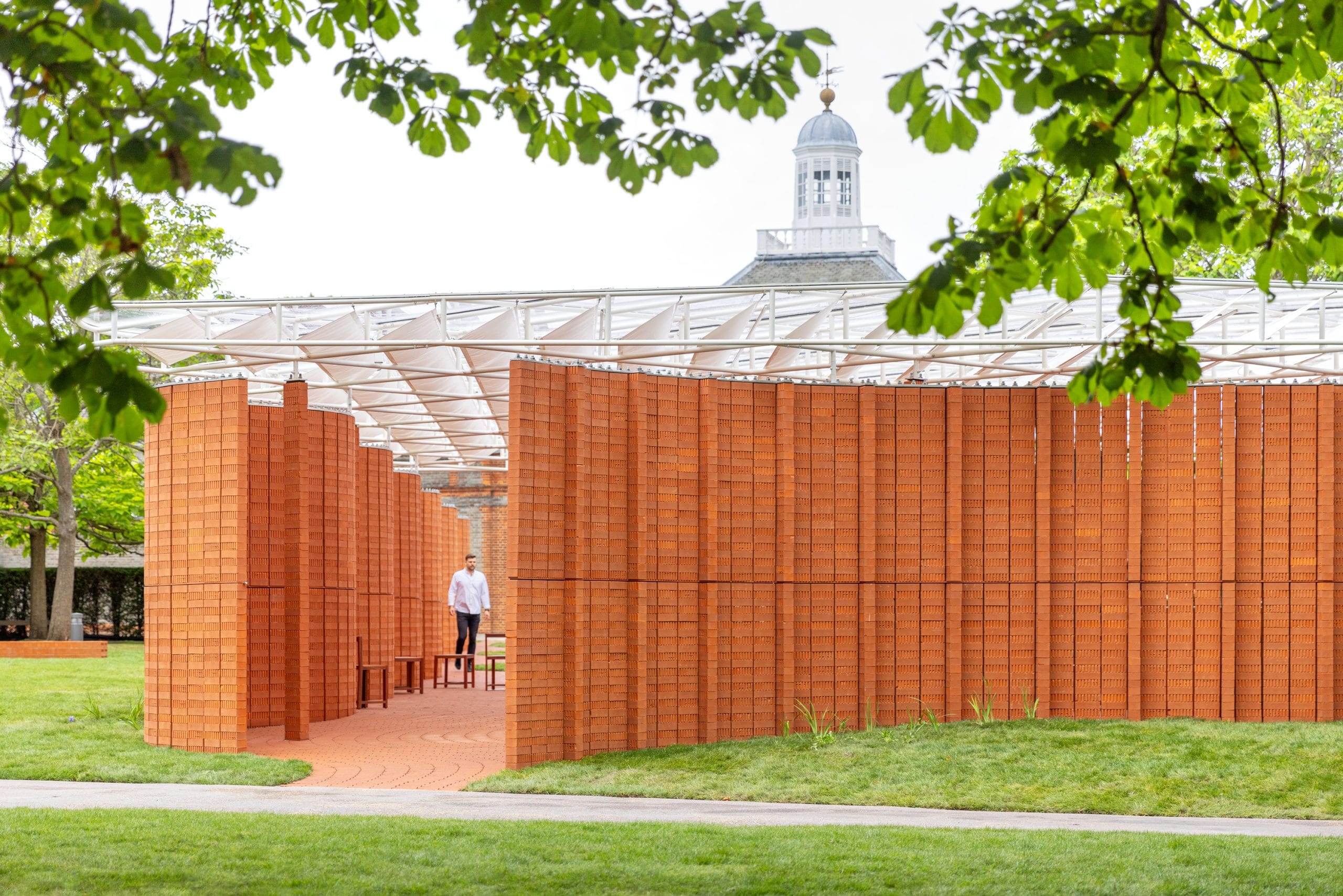
In recent years, there has been more emphasis on ecological material solutions in the Pavilion designs. The use of timber was prominent in previous projects by Minsuk Cho (2024), Lina Ghotmeh (2023) and Theaster Gates (2022). Surprisingly, it’s the first time in the 25-year-old programme of the Serpentine Pavilion, that the architects experimented with brick construction. Inspired by undulating forms in brick structures going back to ancient Egypt, Abascal and Arienzo discovered the structural properties of the historical so-called crinkle-crankle garden walls in England, which underpins the design as the key formal inspiration. The Pavilion design was an opportunity to explore this traditional building technique supported by contemporary engineering. And at the same time carrying on Zaha Hadid’s idea of endless experimentation, encapsulated as the driving force by the late architect, whose design launched the Pavilion programme in 2000.
Within the theoretical discourses of 20th-century Modernist architecture, curved surfaces and brick walls were seen as a shift away from the strict formal rationalist aesthetic, for example in Alvar Aalto’s buildings, such as the MIT Baker House or the Helsinki House of Culture. The Pavilion by LANZA atelier can be understood taking a similar perspective in today’s context: an alternative to the widespread sense of lightness and transparency of the minimalist ‘smooth space’ in architecture and design. While the wave-like forms in textured brick provide a grounding tactile experience, the material connections remind of architectural historian Kenneth Frampton’s thesis for resisting the universalising effects in the Modernist approach. Frampton’s idea of creating links with the existing context, while conjuring new formal solutions, is beautifully exemplified in a serpentine.
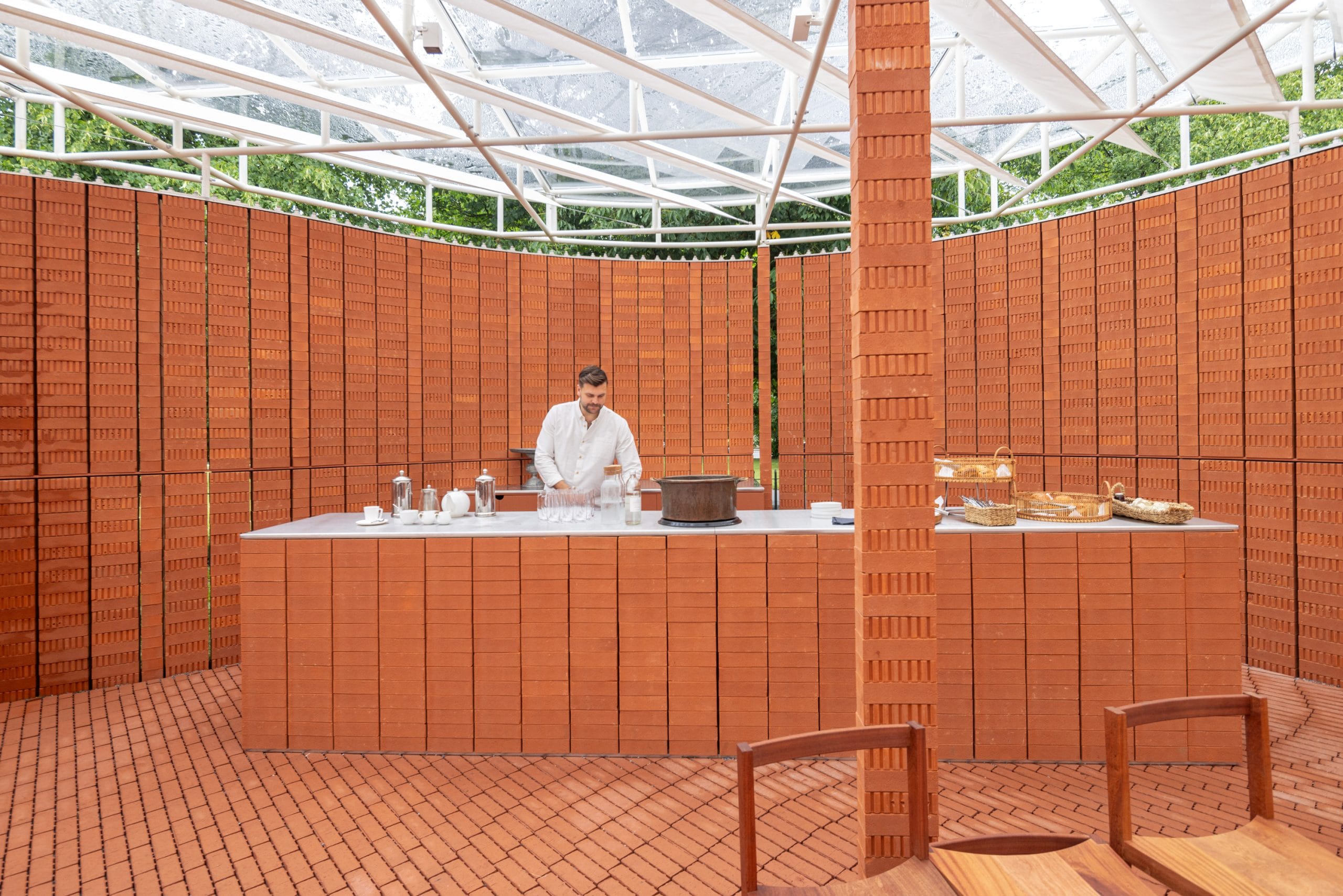
The craft-like assembly continues throughout, with the 244 m2 floor area also constructed of bricks, laid out carefully on gravel, following the winding pattern of the walls. A translucent steel structure acts as the roof, hovering above the brick walls and a set of posts made of stacked bricks. The light-coloured ceiling structure, evoking the technical solutions of 90s high-tech design, allows air and light to circulate within the building. This element creates a formal and material contrast with the textured presence of the walls, while adhering to the curving edges, and simultaneously creating a material continuity with the hidden structural system holding the brick walls together. Metal parts from the ceiling cast shadows on the ground when the sun comes out, breaking in with the effect of the light coming through the small vertical gaps on the walls.
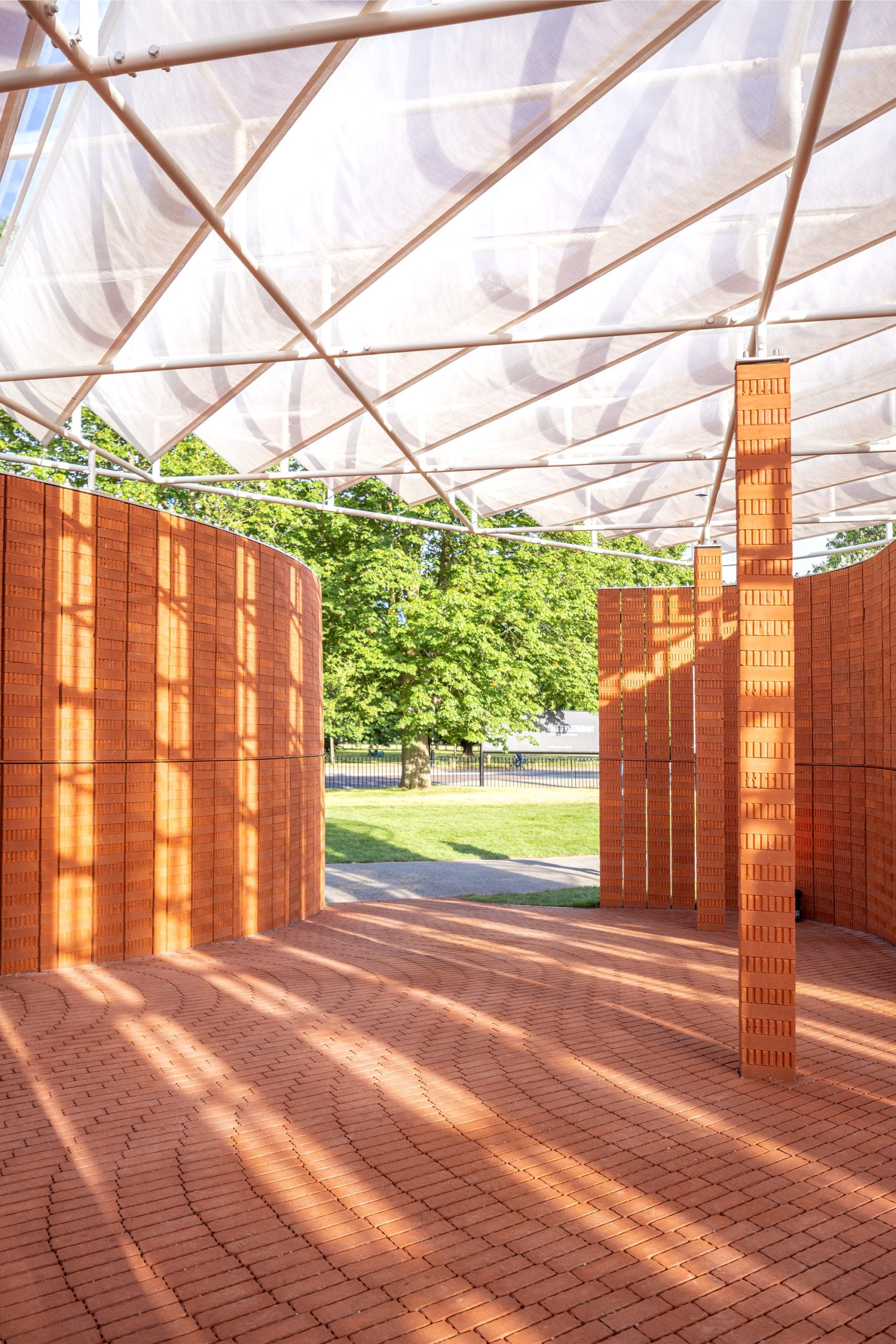
Although the significance of a Wall reminds us of geopolitical divisions – the Great Wall of China, the Berlin Wall, or the wall between Mexico and the US as a border and territorial marker – here the wall can be experienced as an element that shapes and celebrates the unique space within the garden. Instead of imposing division, the walls define the landscape, aiming to create harmony between nature and architecture. Isabel Abascal talks about ’the correct order’ between elements and materials. In the press release she brings up the notion of paradise in relation to the garden, which nevertheless requires a structure and a degree of human organisation: ”But what is paradise? It is not the deep green womb of the jungle, where beasts roam free. No, a paradise is somehow restrained; cut down to human scale.”
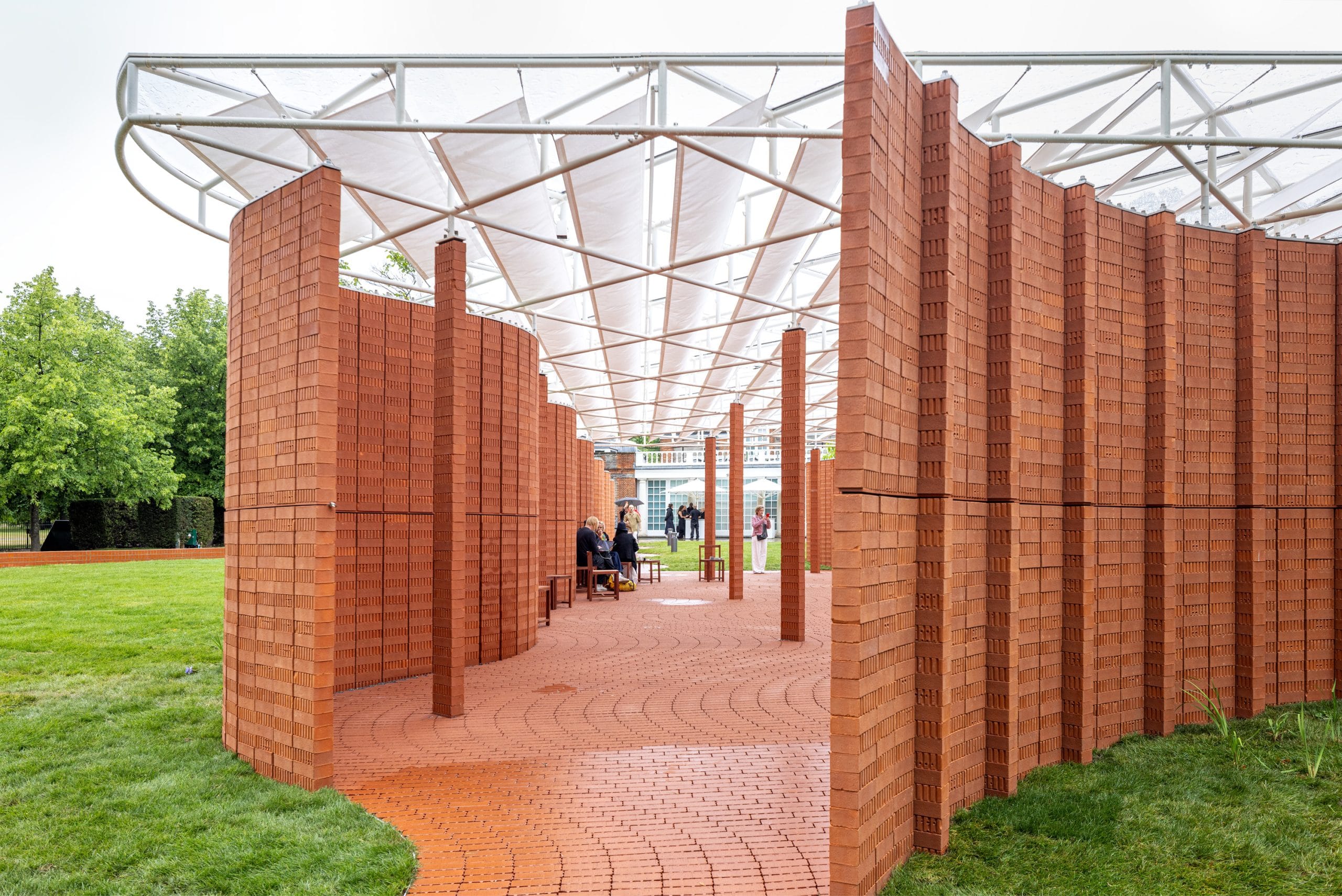
At the end of October, when the Pavilion closes, everything will be dismantled. The temporary nature of the structure sets constraints on its design, but is simultaneously a great exercise for imagining and testing the potential for flexible systems. The building is designed to be movable and ecological in that sense. Instead of a traditional bonding of bricks together with mortar, the walls are assembled using a metal support structure, which slightly alters the acoustic quality of brick, but allows for the Pavilion to be moved to another location.
Open for the public to visit for free throughout the summer, the Pavilion is one of the most popular architecture exhibition destinations in the whole world, and the concept has inspired similar projects elsewhere. Hearing who has been commissioned for the next Serpentine Pavilion is always exciting news, discovering the architects and seeing their full-scale project showcased in the Royal Parks of London. Previous pavilions have been acquired by contemporary art centres, for example Frank Gehry’s pavilion can be visited at the sculpture park at Château La Coste in the South of France, and the Smiljan Radic pavilion at the Hauser & Wirth art gallery’s Somerset outpost in England.
As the design and construction are completed in six months, the schedule is tight. For the structural design and choice of materials AECOM engineering firm has been part of the collaboration as technical advisors for 13 consecutive years now. The budget is fixed from the start, with support from the global financial firm Goldman Sachs. This year for the first time, Rolex is also providing support through its Perpetual Arts Initiative programme.
Serpentine Pavilion, 6 June – 25 October 2026