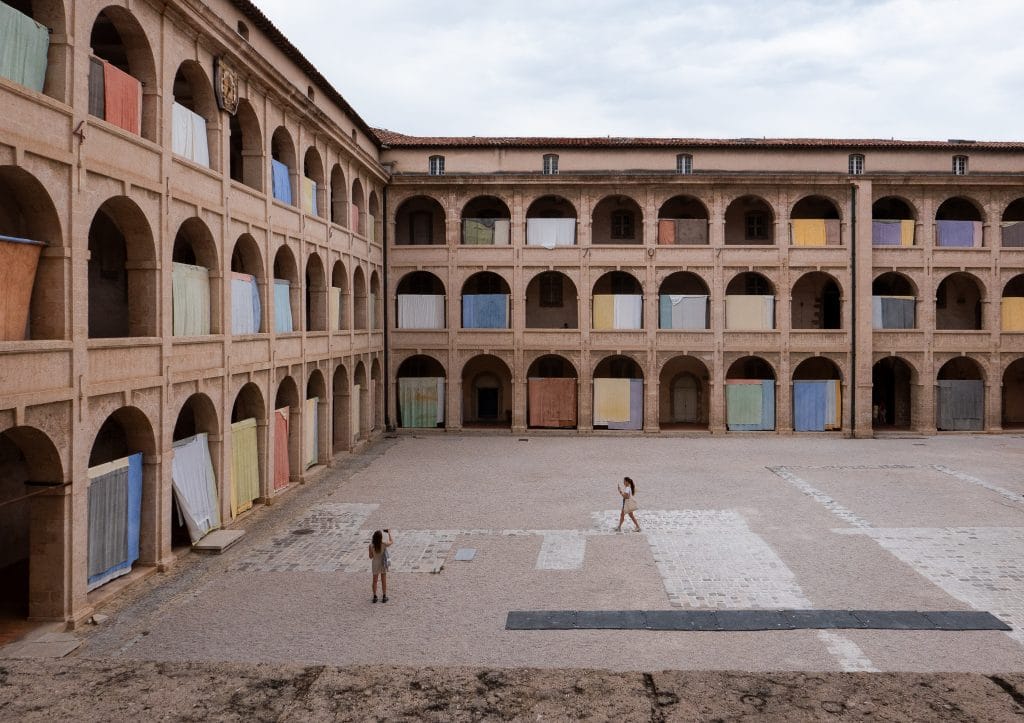
La Vieille Charité dates from the 17th century, originally built for housing the poor and homeless in Marseille and designed by celebrated local architect Pierre Puget. It was saved from serious deterioration on Le Corbusier’s initiative, who praised its beauty while working on the Cité Radieuese building in Marseille in the late 1940s. Following a long restoration project launched in the 1960s, it has been converted into a large cultural centre of the historic Panier district and home to several art institutions as well as a program of contemporary art commissions.
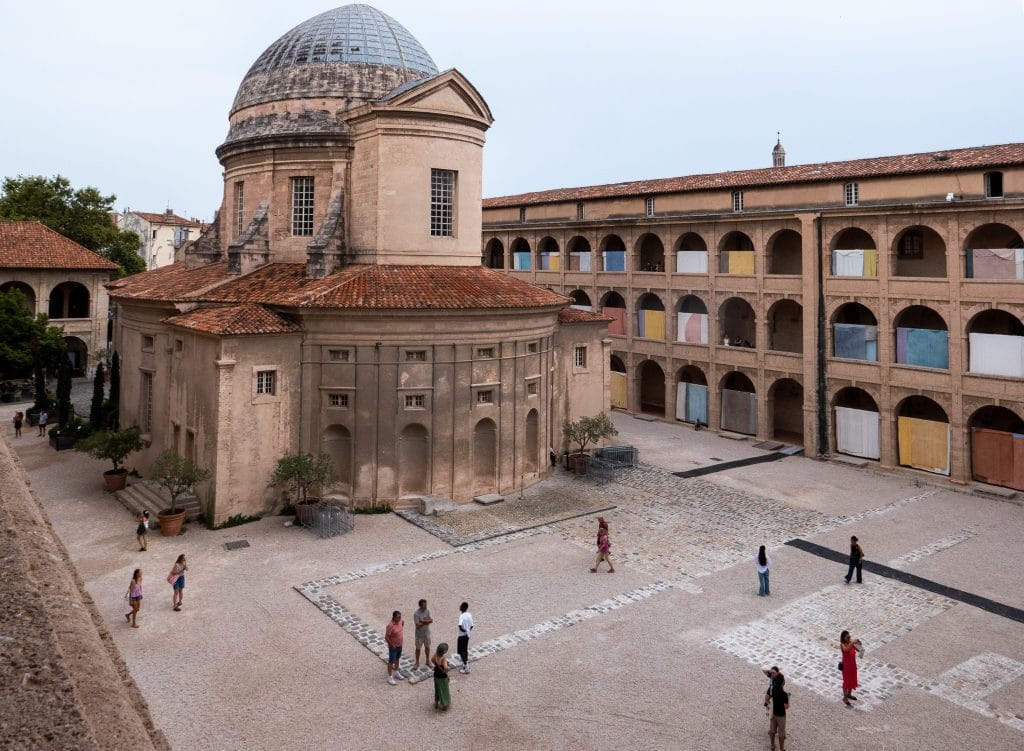
The latest art commission is by Marseille-based artist Adrien Vescovi. Inaugurated in late May, the exhibition Dormir comme le soleil will continue until January 2027 with the idea that the exterior part will evolve over time under changing weather conditions. Vescovi’s work recalls the aesthetic strategies and the political ethos of the 1960s avant-garde Arte Povera movement, which opposed the capitalist system of production using abandoned textiles and objects. His approach also echoes with site-specific textile works by contemporary artists such as Katharina Grosse, although Vescovi’s work seems more delicate, fragile and modest.
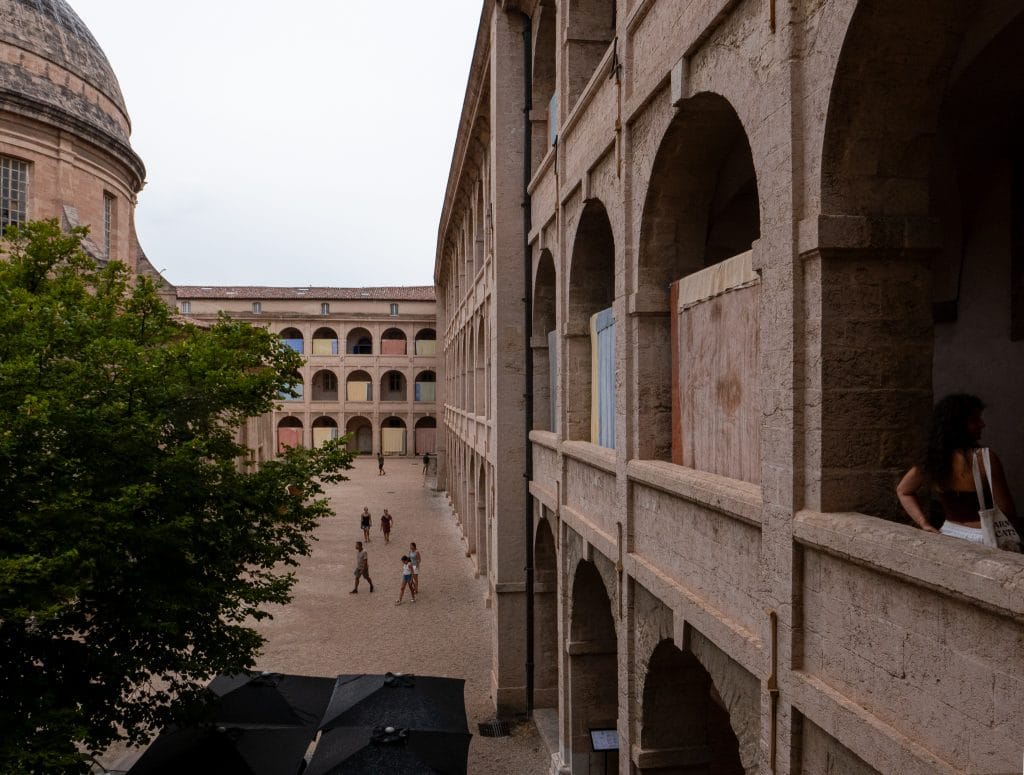
Vescovi’s practice is based on recycling and tinting, a craft-like process, which draws from the quality of ancient production methods, in total contrast to the fast results of digital printing. Like a patchwork, the installation surrounding the Charité courtyard is made of ancient salvaged sheets, developing as a rhythmic composition dressing the arched openings. The muted tones create a soft calmness, a haptic melancholic effect in great contrast to the intensity of the surrounding city. Folded over horizontal metal rods in line across the openings, on closer look the textiles show Vescovi’s delicate sensitivity to colours as well as the great quality of centuries old natural fabrics, when bedding was passed on to future generations. Today in big cities we can see streets scattered with abandoned duvets, sleeping bags and mattresses, which recalls the crisis of homelessness as well as the disposable nature in contemporary material culture. While Adrien Vescovi’s artistic practice is concerned with the wasteful use of materials in fast fashion, this installation somehow evokes also the historic authoritarian legacy of the building, initially built to keep the poor out of the streets.
A ground level gallery space is dedicated to explaining the working method of Adrien Vescovi and the technique with natural pigments for this project in which 648 ancient sheets were tinted. Working with such a massive amount of material took three months at the artist’s Marseille atelier. The laborious process can also be seen as a celebration of slowness, opposing industrialised manufacturing and the instantaneity of today’s design technology and fast-fashion. The subtle tones seem to grow from an underlying nostalgia, evoking the ‘lost project of modernity’. Vescovi describes long train journeys between Marseille and Madrid (where he spent time in an artist’s residence) and his observation of the beauty of the natural landscapes as an inspiration for the colours. In the atelier his team created 300 colours from 32 different earth pigments.
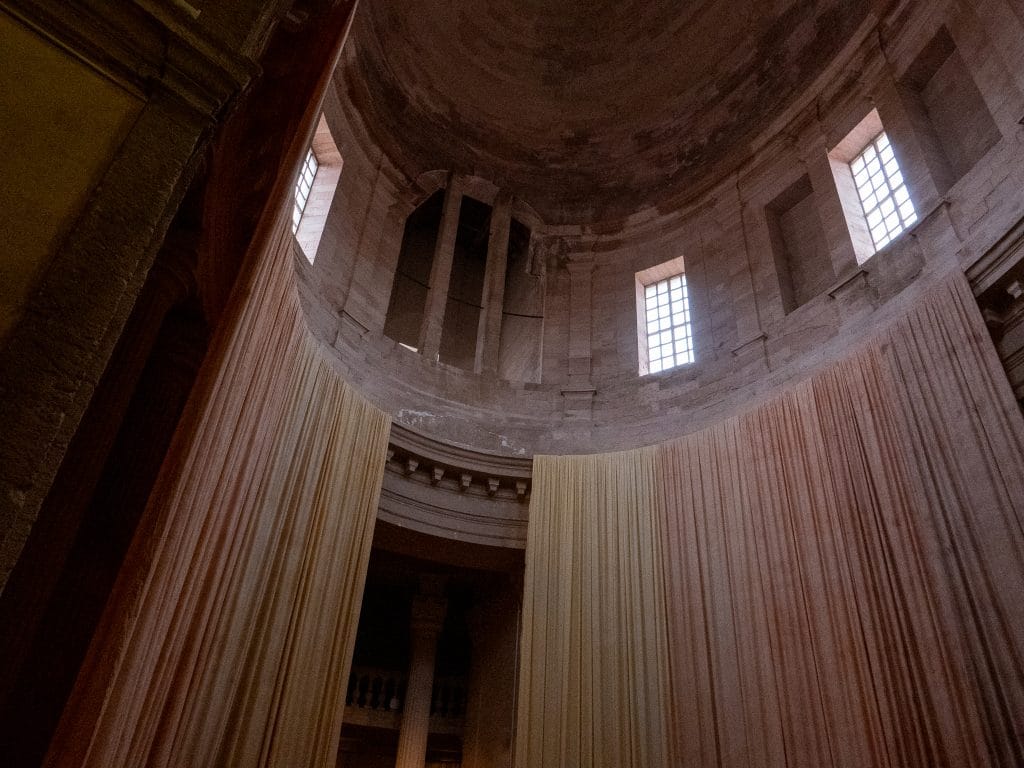
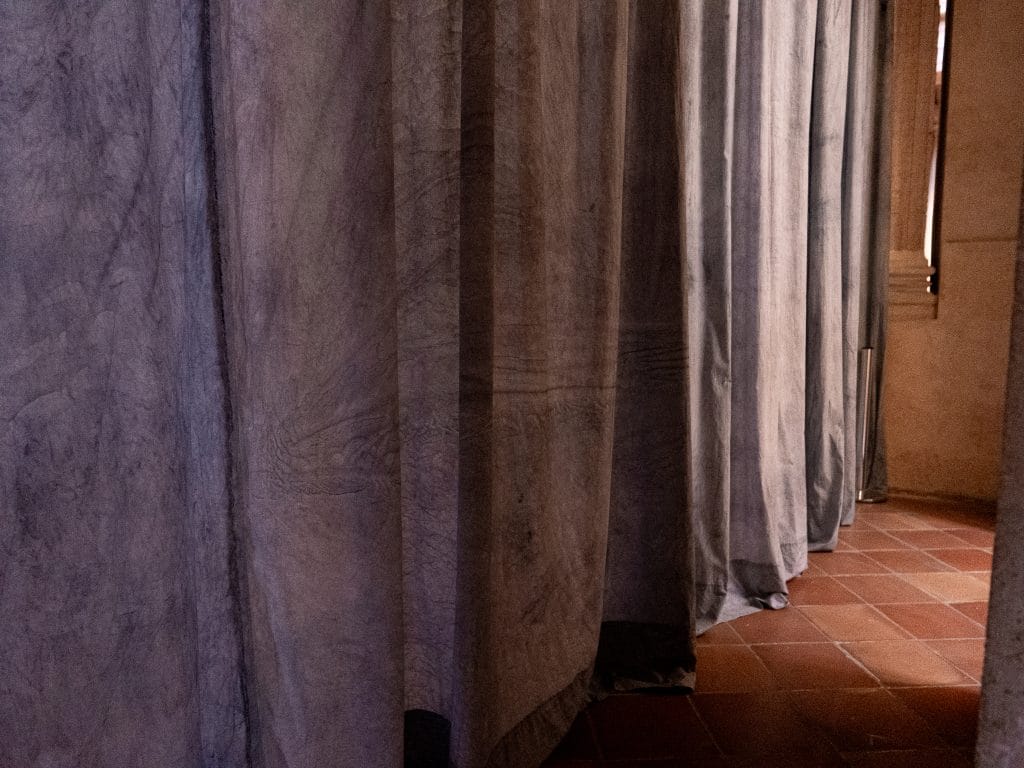
The high-point of the exhibition can be found inside the Baroque-style chapel of the Charité courtyard. Here Adrien Vescovi’s installation of tinted fabrics rises up to eight meters, creating an incredible continuity with the tones of the historic building materials. The draping fabric used inside the chapel is Supima cotton, coloured with pigments which fuse them into a delicate material presence with exquisite craftsmanship. In a dramatic vertical fall the materials bring a sensorial layer that amplifies the chapel’s spatial experience beyond mere scenography.
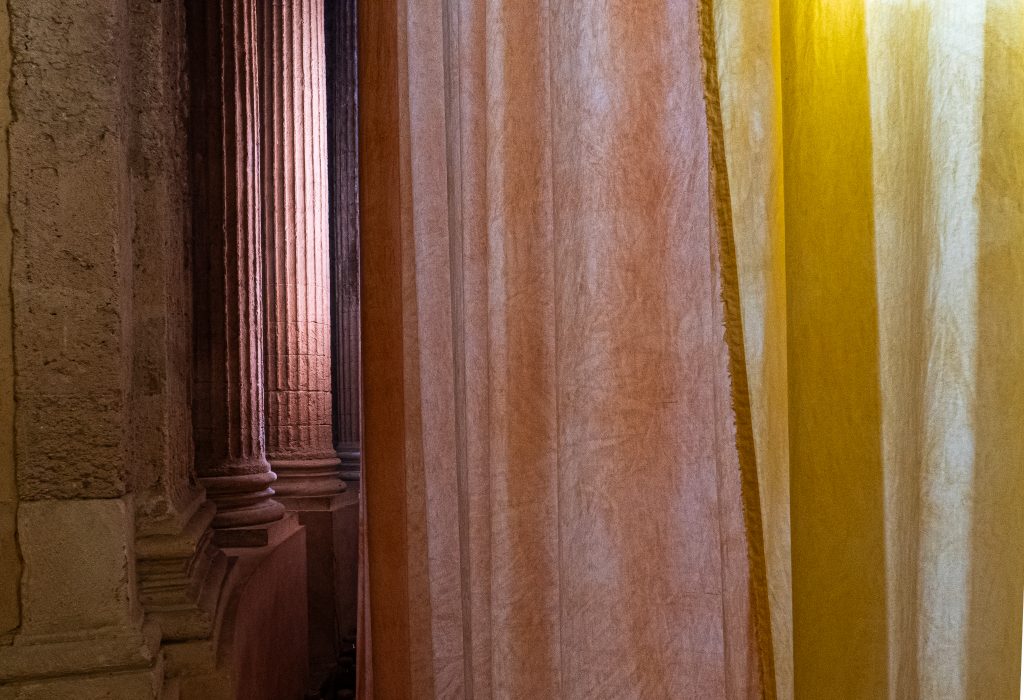 Patterns on folding Supima cotton inside the chapel, photo ©Marianna Wahlsten
La Vieille Charité ‘Dormir comme le soleil’ 16 May 2026 – 10 January 2027