Category: Blog

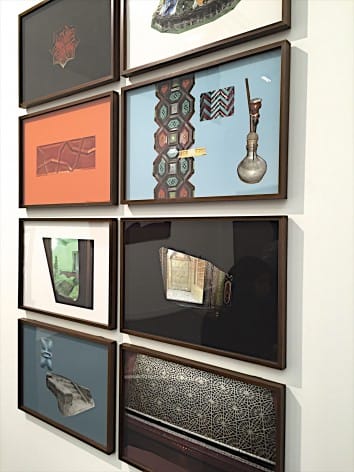
Hélène Binet - Therme Vals Tryptich

Hélène Binet receives Julius Shulman Award

Therme Vals Tryptich, at Fragments of Light exhibition (main photo)
© Hélène Binet, courtesy ammann//gallery, Cologne

Last Saturday in Los Angeles London-based artist Hélène Binet received the prestigious Julius Shulman Award of Excellence 2015 in conjunction with the opening of her new exhibition Fragments of Light at the Woodbury University Hollywood Gallery. As an architectural photographer she has produced a large archive of images documenting buildings by leading contemporary architects such as Daniel Libeskind, Zaha Hadid and Peter Zumthor. Some of her most personal works focus on the play of light with form.

Binet continues shooting on film, which gives her images a certain richness and a depth in the details, something that is not possible to achieve in digital photography. She works with a large format camera, or a Hasselblad which is slightly easier to carry around, and likes the intensity and restriction that comes with the process of taking photographs on film. “I believe photography is about celebrating an instant. You say yes to it and commit yourself to that moment”, she explained at the preview of the exhibition Constructing Worlds at the Barbican in London. The exhibition, which opened in Stockholm last month at the Swedish Centre for Architecture and Design, is an in-depth survey of the different ways the built environment has been used as a subject in documentary, fine art photography and photojournalism.

© Binet_Jewish Museum_courtesy ammann_gallery
Jewish Museum Daniel Libeskind, at Constructing Worlds exhibition
© Hélène Binet, courtesy ammann//gallery, Cologne

From Binet’s archive a series of images of the Jewish Museum, designed by Daniel Libeskind was selected for Constructing Worlds: “The curators chose the subject and they had a very precise idea – that’s why the show is so good”, she explained. Libeskind was an important inspiration for Binet at the start of her career and she was thrilled when she got the opportunity to photograph the Jewish Museum: “It’s an interesting program, the void and the light, something you experience very strongly in the building.” The display of black and white images include a series of nine small photographs, handprinted by Binet herself. “I like to do things by hand, to create an object, not just files. In the darkroom it’s a creative moment. For a big print I might do some digital adjustments about the contrast or the amount of light or dark, but it’s very strict”.

Print18
Firminy, Le Corbusier, at Fragments of Light exhibition
© Hélène Binet, courtesy ammann//gallery, Cologne

Binet’s work has been exhibited widely and includes also historic architecture (a series on Hawksmoor buildings, at Venice Biennale in 2012) and Le Corbusier. Her photographs demonstrate a particular understanding of architecture, inspired by the abstracted forms of Lucien Hervé, Le Corbusier’s trusted photographer, as well as paintings by Giotto and Vermeer. Of the many buildings Binet has photographed and experienced one of her favourite ones is the Therme Vals by Peter Zumthor (in the top image) in her native country Switzerland: “One of the structural elements there is the water – it’s quite amazing”

Fragments of Light 28.2 – 29.3.2015, Woodbury University Hollywood Gallery, Los Angeles

Constructing Worlds 20.2 – 17.5.2015, ArkDes, Stockholm

[mashshare]
Garden Bridge, London

Neo-Romantic Urban Bridge Design – hotly contested in London

A bridge running over the Thames in the historic heart of London must be a dream project for any architect. And one with a garden on top of it – as the ultimate statement in contemporary urban bridge design and engineering – even more so. The much debated Garden Bridge, envisioned first by actress Joanna Lumley, supported by Boris Johnson and designed by Thomas Heatherwick was given the go-ahead last year, but is now facing a legal challenge in the high court. See Guardian.com

The original concept was dreamed up by Lumley in the late 90s as a kind of commemorative design in the aftermath of Princess Diana’s death. The idea embodies values from popular culture, which were developed into a politically motivated earlier garden bridge project by the architectural studio FAT, which never took off however.
See Sam Jacob on Dezeen.com

Today the visual concept is imbued with glitzy symbolism and girly credentials as ‘a tiara on the head of our fabulous city’ as Lumley describes (in her best ab-fab pr voice) in this promotional video .

But not everyone is convinced. In the video Lumley talks about the bridge as an ‘incredibly daring project’, which would rejuvenate the dead area between the Temple on the north side and the South Bank with its cultural institutions. The pedestrian bridge would certainly add some much needed picturesqueness to the concrete environment on the South Bank, where some greenery could greatly improve the slightly sinister feel of the area. Lasdun’s National Theatre building is beautiful inside, and what could be a more pleasant way arriving to the theatre than a stroll through a garden walkway over the Thames – quite spectacular, no doubt.

In many ways the bridge project is the apotheosis of a certain type of romanticism in today’s urban planning. It is clear it would become one of the most popular meeting places in London, and as one of the bridge’s supporters relishes, it could be the ultimate romantic spot where “many proposals will take place”. It is an expression of the traditional British notion of the picturesque in the contemporary context. The need to break away from structures that are too rigid seems to underpin British culture. From William Morris to John Ruskin rebellion against forms and ideological concepts that are too rational, has always been part of British creativity. Modernist logic never really took off in the United Kingdom.

In a vast city struggling with all sorts of transport problems it makes sense to question the strategic rationale behind the bridge. And would it spoil the unforgettable ‘Waterloo sunset’, no doubt one of the most stunning views in central London, others worry. In a city dotted with exclusive garden squares, the bridge promoted as ‘open for all’, from an idealistic neoliberal perspective, would certainly offer even better views.
M.W.

[mashshare]
Sfax, Tunisia

Tuomas Uusheimo Exhibition at Lasipalatsi, Helsinki

HELSINKI: The Tuomas Uusheimo Exhibition
New exhibition by Berlin-based photographer Tuomas Uusheimo http://www.uusheimo.com opened in Helsinki this week. Uusheimo travels extensively on commercial assignments all over the world and has also spent longer periods in one place on artists’ residencies, in Tunisia recently. He trained as an architect first, which shows in the way he observes the built environment. The photographs showcased at the Lasipalatsi Film and Media Centre form a story of observations from different locations across the globe.

There is a meticulousness in the way Uusheimo captures light and architectural forms in his compositions. A great example of this is the image we used for the cover of Grand Tour Helsinki guide: a view with four landmark buildings. Uusheimo is experienced working with the cool Nordic light, but says it can be tricky: “Maybe just the lack of it really. And that is a good thing too” he said, “I shoot a lot in the mornings and at nightfall when the light is scarce, it often creates more interesting atmosphere than direct sunlight and blue skies”.

Uusheimo uses mostly a Canon 5D Mark III, which he says has a great selection of lenses. Even on commercial assignments he prefers natural light and rarely uses additional light equipment. One of the most spectacular, although challenging, moments he has encountered was in Hämeenlinna in Finland a couple of years ago: “It was the darkest time of the year when the sun hardly rises above the horizon, which makes the gloom of twilight last longer. There was fresh snow on the ground from the night before. The temperature was around -25C and the weather was crystal clear with tiny ice snowflakes in the air. The setting was perfect in terms of light.”

The exhibition space is housed in the 1930s Lasipalatsi building, a key example of Nordic modernist architecture, which has been recently restored. The young Viljo Revell was one of the architects behind its iconic form.

http://www.lasipalatsi.fi/info-en
http://www.lasipalatsi.fi/tapahtumat/event/444—souvenirs-matkamuistoja-tuomas-uusheimon-valokuvia

uusheimo-souvenirs-04
Kokemäki, 2014

Bangkok, Thailand
Bangkok I, 2012

uusheimo-souvenirs-07
Brussels I, 2009

[mashshare]
Fondation Louis Vuitton, Frank Gehry - interior

Inside Gehry’s dream – the new Louis Vuitton Foundation

PARIS

First sightings of Frank Gehry’s Louis Vuitton Foundation, his dream vessel for the cultural heritage of France: a hulking stern of vast glass sails, a new-age Time Bandit Galleon. While monumental and majestic, it also looks soft – almost like the sky-grey opaque, sky-reflecting, panels could ripple in the breeze. Their size is only accentuated by the newly planted rows of trees near the main entrance, creating a bizarre Bonsai effect in tandem with the surrounding park.

LV-M_Birch 2

Once inside, the architectural approach is more formal, with a vast, boxy lobby area and a glass-panelled bookshop. It’s like entering a vast white container before navigating, either by ascending or descending, the other decks. From here on Gehry’s expression of a dream vessel gathers pace, producing not just one dream, but a series of dreams within dreams, as each level presents unexpected moments – sometimes hangar-like gallery spaces, sometimes smaller, darker intimate spaces. Moving upwards, not only do you get close up views of the complex, skeletal structures supporting the building’s curved sails, but also brief glimpses of the Bois and irregular-shaped snapshots of Paris, including at one moment, a rather apologetic, size-O, Eiffel Tower, rising in the distance – another dream from a more rigid age of architecture.

Continuing up the rough-hewn sandstone staircases, that seem strangely soft to the foot, or taking the requisite intergalactic escalators, the eye is constantly challenged by the edgy contrast of materials. Rock meets satinized sheets of white metal, elaborate twisted girders, like tangled ribs, gracefully turn and transcend into giant arcs of golden oak, while metallic escalators undulate like the graceful, gentle waterfall downstairs.

LV-M_Birch 4

With each twist and turn  – and there are many in the structure – I felt like I was a modern-day Jonah, exploring the insides of a technological whale. Even outside, the upstairs terraces, with planted areas and magnificent views, continue the mystery as new ways to climb up towards the crows nest present themselves with each twist and bend.

After the busy-ness of the architectural structures upstairs, and certainly under the shade of night, the submerged basement areas, with their hypnotic pools of water, provide another element of contrast with what towers above. And yet all is not as it seems. An installation of mirrors by Olafur Eliasson create dizzying vistas of refracted black silhouettes on acid yellow, a beguiling catwalk, its zigzag trajectory mirrored in the still waters of the lake beneath.  It’s like a duotone fashion shoot from an Orson Welles movie: Figures appear… only to disintegrate. Now near … now far. All in a dazzling glow of sulphourous yellow.

LV-M_Birch 3

I might be mistaken, but at one point the reflections of the diagonal pillars started to dance in front of me, and for a moment, I’m sure I caught sight of an L overlapping a V in the waters below. Maybe it was just another dream within a dream?

 Text and photos: Mathew Birch


[mashshare]
The bed at Frieze Masters

Most talked about at Frieze Masters

LONDON

There is always an element of surprise inside the temporary, deluxe showroom at Frieze Masters in Regents Park. Designed by New York-based architect Annabelle Selldorf http://www.selldorf.com, it’s an elegant structure, where classical art and old masters change owners. Only a small part of visitors could ever buy anything, but what a great opportunity for seeing rare artworks available on the market.

This year it wasn’t an individual work, but the stand of Helly Nahmad Gallery http://www.hellynahmad.com, a new exhibitor at Frieze, that  became the talk of the fair. Key 20th century master works, including Lucio Fontana, Pablo Picasso and Morandi were staged within a film-set-like installation; and no one passed by without stopping – at least to see why so many people were congregating there. The presentation was  the total opposite of the clinical, neutral gallery cube designed for close inspection of art works – a breath of fresh air for that reason.

SONY DSC

Conceived by set designer Robin Brown, the stand conveyed an essence of bohemian 1960s Paris, with an imaginary home complete with an inspiringly chaotic study, set against a Fontana and a Dubuffet amongst an accumulation of stuff, evoking a state of creative obsession.

Morandis, Miros and Picassos were scattered amid personal notes and photographs into a sprawling composition. The whole presentation had a strange sense of humanism, quite the opposite to the darker narratives seen in many contemporary installations.

SONY DSC

SONY DSC

The setting provided an opportunity to relate with an eccentric, imaginary collector, and also to realise the transient nature of our data-driven existence. The accumulation of personal belongings, photographs and stacked magazines – in today’s world stored on iCloud and hard drives – is a link to a historical context, a previous existence before the digital age.

There was a sense of nostalgia for the high modernist ideals of the 1960s, before the onset of other types of radical post-modern ideas of the following decades. The space was messy, but also strangely positive and exhilarating.

Brown’s presentation provided many interesting contextual ideas around the paintings and the period when they circulated on the market as avant-garde novelties. Now these works belong to museums, or the homes of the very rich, the ‘art world’ elite, which has become a philosophical subject elsewhere.

“It will be a one-off” Brown said, clearly happy with all the attention that the installation has attracted. The king size bed below the Burri and Twombly paintings, next to Giacometti’s sculptures, with Godard films on the boxy TV, was a nostalgic reminder of French cultural values in dialogue with contemporary installations like Emin’s famous bed.

SONY DSC

M.W.

[mashshare]
The Yenikapi Project, the Island of Giudecca

Venice Biennale – the Island of Giudecca

Visiting Venice for the Biennale, we each end up finding our individual trajectories through  its myriad narrow streets and along its blue green canals.  There are merits to getting lost beyond the bustling Giardini and the Arsenale. Accept the inevitable dead ends, and sometimes an off-piste excursion can reveal hidden gems.

Scattered throughout the city there are many collateral events. A short vaporetto ride from San Marco square, on the Island of Giudecca, next door to the Bauers Palladio Hotel is the Zuecca Project Space, showcasing The Yenikapi Project, a collaborative exhibition by Peter Eisenman and Aytac Architects, which focuses on their recent work in Istanbul.

The Istanbul we see today has been thousands of years in the making, yet much of its contemporary development is controversial and lacks sensitivity to the city’s ancient roots. The Yenikapi Transfer Point and Archealogical Park demonstrates an alternative model for contemporary building in the city. The Eisenman/Aytac scheme is complex and gives considered treatment to it’s historic context, shaping itself around the newly uncovered archaeology.

The site is uniquely positioned to reveal the layering of human history in Istanbul. With the architectural drama arising from the collision of the future and the past in a way which could scarcely be more apparent. The project evolved in the years following the discovery of archaeological sites during the construction of a major underground railway station. Preserved in mud of the Byzantine harbour, thirty six shipwrecks, and artefacts from Neolithic through to Roman times. The finds all telling of the changing habitation of Istanbul.

Peter Eisenman, who personally designed the exhibition, draws references to the host city, Venice, and invites comparison with Istanbul. There are obvious similarities between the two, however their differences are more profound. Whereas Venice has rigorously preserved its history, and remains, save for the biennale, almost untouched by modernity, Istanbul is throwing itself headlong into the twenty-first century. The expansion of the city is a vital, contradictory affair which promises to make it an ever more remarkable place. Eisenman’s message here is that contemporary architecture need not be the destructive force it is often perceived to be; rather it has an important role in strengthening and deepening the relationship we have with our history.

On our travels – as when we turn the pages of Italo Calvino’s Invisible Cities – we come to understand the historic reveries common to all urban environments. In a similar way the Biennale which Rem Koolhaas has curated, is also a forum for discovery where everyone will come away with different opinions. With simply too much to see, and unable to absorb it all in its entirety, we must discern our impression from our accumulated glimpses. With a succession of disparate chronicles, the layers of narrative enrich but do not approach objectivity.

The Yenikapi Project, until 23 November 2013

http://www.zueccaprojectspace.com/

By Peter West


[mashshare]