
Marianna Wahlsten –
“For us, architecture is always the result of collective intelligence rather than individual authorship.” –Isabel Abascal-
Working from Mexico City, architects Isabel Abascal and Alessandro Arienzo had seen images and catalogues of the previous Summer Pavilions, but the first one they actually visited was the 2025 one by Marina Tabassum, after they had received the commission and came to visit the site in London. “The Serpentine Pavilion has always been an important reference for us because it represents a rare opportunity where architecture can exist as an open cultural conversation,” Isabel Abascal explains via email.
Since summer 2000, the Serpentine Pavilion has become the pinnacle in global architectural experimentation, bringing forth current themes, aesthetic approaches, and technical developments. It’s fascinating to observe the changing formal and material approaches each summer. Each pavilion design has been erected with support from some of the leading engineering firms over the years. In the very short timeframe starting from research-into-the-site, then design-to-construction, everything happened very intensively, Abascal describes. These particular conditions provide a high momentum for the creative process.
However, like each architectural practice chosen for the Serpentine commission, LANZA atelier already operates within a singular artistic approach and a discourse underpinning their design for the pavilion. So the beauty of the temporary Pavilion concept lies in discovering forms of aesthetic and technical experimentation driving the architectural practice. “It was supported by an ongoing body of work that had already been developing these ideas,” Abascal confirms. ”The schedule is certainly demanding, but it also creates a very focused and collaborative environment. Working with the Serpentine curatorial team and AECOM was an enriching process because everyone shared the ambition of making the project as strong as possible while respecting the realities of construction, engineering, and public use.”
“Constraints are not necessarily limitations – they can become productive tools that sharpen ideas.”
In architectural design, experimentation is a collaborative process, as Isabel Abascal points out, ”For us, architecture is always the result of collective intelligence rather than individual authorship. The dialogue between design intent, technical expertise, and curatorial vision pushed the project further than we could have achieved alone. It reinforced our belief that constraints are not necessarily limitations—they can become productive tools that sharpen ideas and reveal new possibilities.”
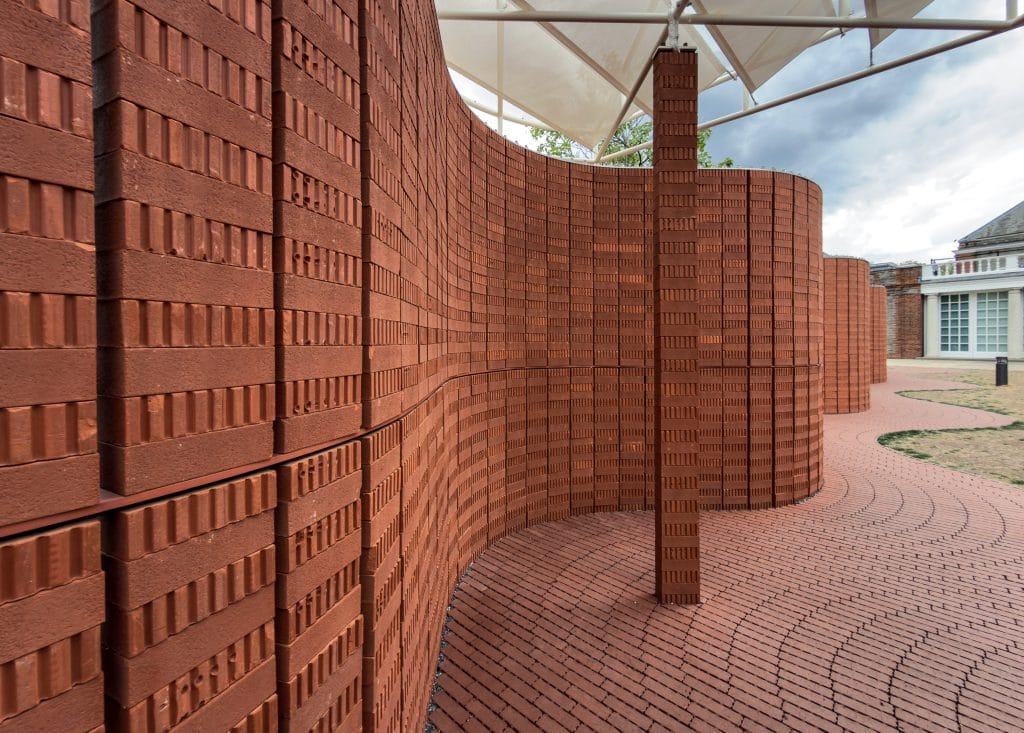
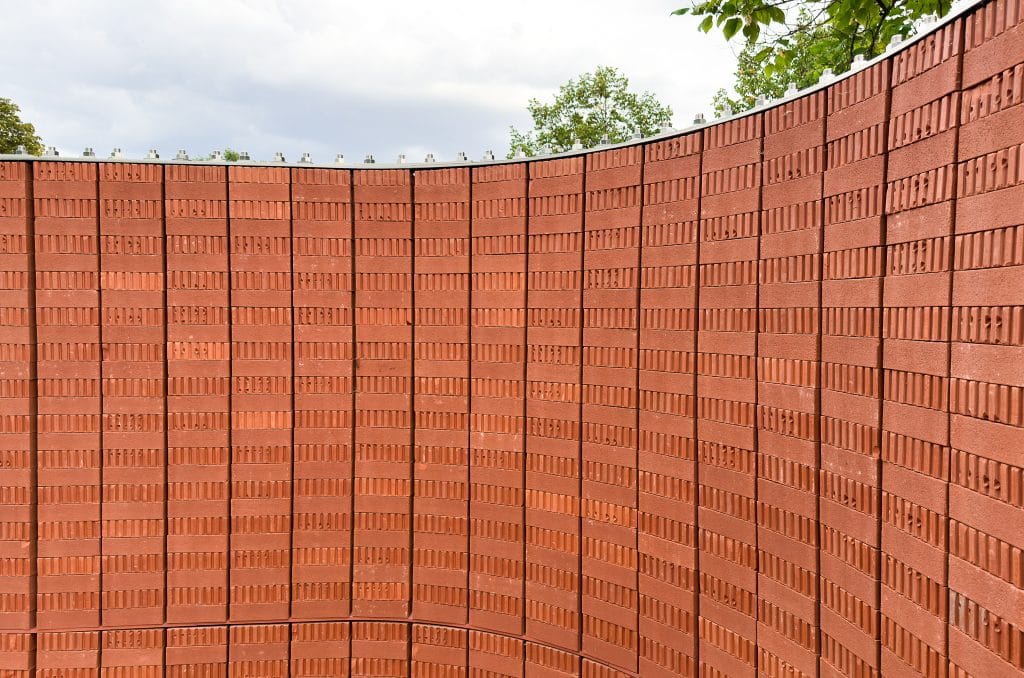
The choice of brick as main material creates continuity with London cityscape, where brick has been used over centuries in so many different styles, from Gothic cathedrals to Georgian houses, post-war social housing and new apartment blocks. As a structural experiment, the Pavilion is created with two walls, where the arrangement of the bricks varies according to the curvature of the wall. The south-facing wall is based on undulating curves holding it up, whereas the north-facing wall is built as one large curvature, showing a different layout of bricks with alternating header rows for increased structural strength. This larger curve follows the form of the surrounding garden hedge.
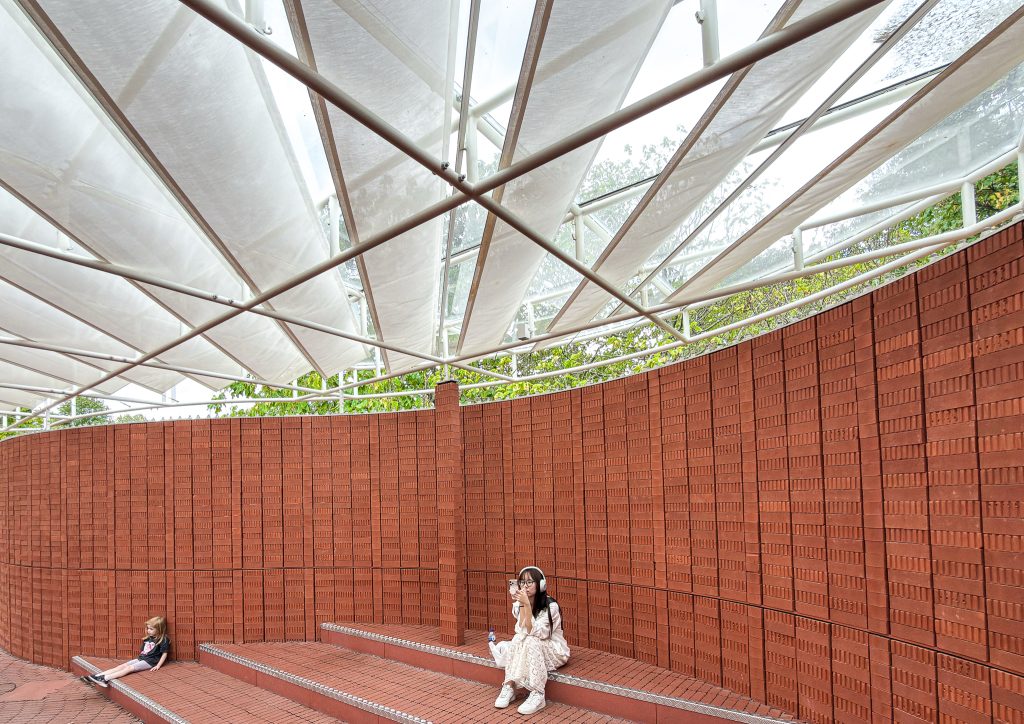
Showcasing an experiment with technological construction style, the undulating walls are topped with a white steel truss-like ceiling structure, a modern twist in contrast with the traditional brick. This material choice creates continuity beyond the surrounding parks with the architectural style of the London sporting stadiums in Wimbledon and Stratford, while providing a technical solution for better ventilation.
Isabel Abascal describes how their practice is open for a wide range of influences, ”Mexican creative culture is deeply informed by the coexistence of different temporalities.” It seems various approaches can be appropriated and fused in ways that are less evident within Western architectural practices. ” There is a strong continuity between craft traditions, contemporary design, and everyday construction practices, and these worlds often overlap rather than exist separately. Material knowledge is still closely connected to the people who make things, and this creates opportunities for experimentation that emerge directly from collaboration with artisans, builders, and local industries.” she says.
Architecture emerges through a collaborative process from design to construction. Abascal does not want to make comparisons between Mexico and Europe, but says that the conditions for experimentation are different. ”In Mexico, there is often a greater willingness to adapt construction processes during the making of a project, allowing ideas to evolve through dialogue with materials and craftspeople. This flexibility has been fundamental to our own work with brick and other traditional construction methods.”